- AJ Products UK
- Inspiration
- Buying guides
- Why use anti-fatigue matting?
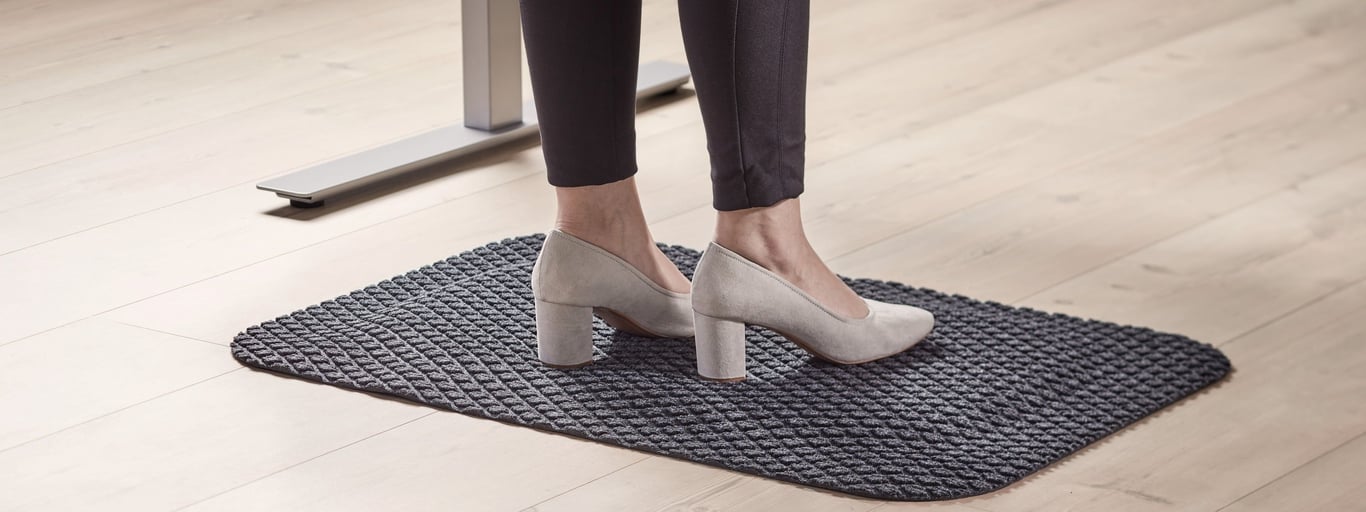
Why use anti-fatigue matting?
Common health issues linked to prolonged standing
People who spend most of the working day on their feet are at greater risk for a number of health issues. Without the right support, standing for hours on hard surfaces can lead to:
- General muscular fatigue
- Circulatory issues and varicose veins
- Swelling and chronic inflammation in the legs and feet
- Degenerative joint damage, especially to the spine, hips, knees and feet
- Foot problems ranging from bunions and corns, to heel spurs and flat feet
- Lower back pain
- Neck and shoulder stiffness
- Increased risk of heart problems and stroke
- Complications during pregnancy
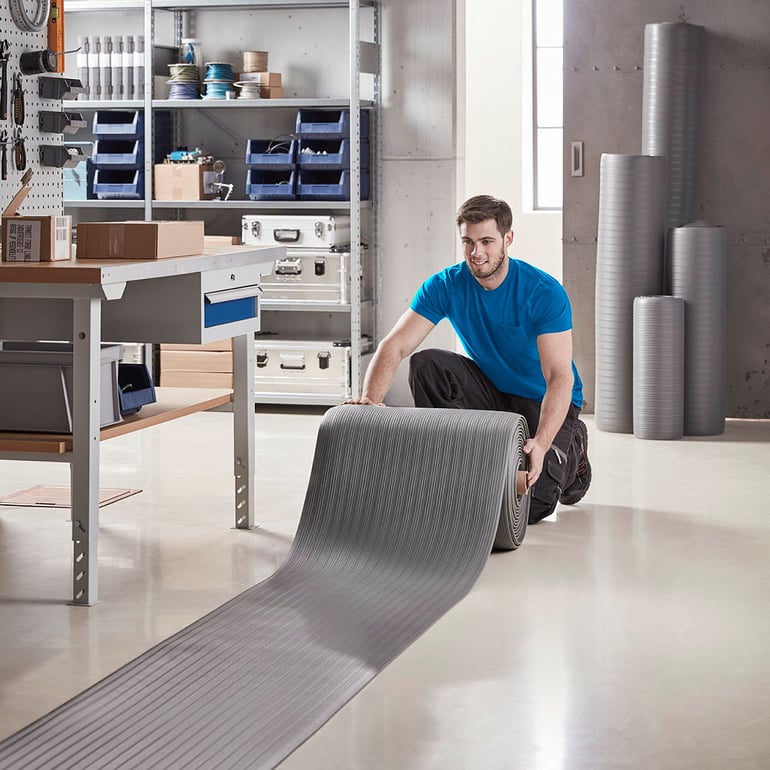
How to protect workers who stand all day?
The best way to reduce the effects of standing for long periods is by allowing employees to sit when possible and encouraging regular movement breaks. It is recommended that workers stand for no more than 30% of their working day. However, we know that this isn’t always feasible and so anti-fatigue matting offer a practical and affordable solution. When combined with appropriate footwear, ergonomic mats can significantly reduce tiredness and discomfort, making them ideal for industrial, commercial and office environments.
What is an anti-fatigue mat - and what does it do?
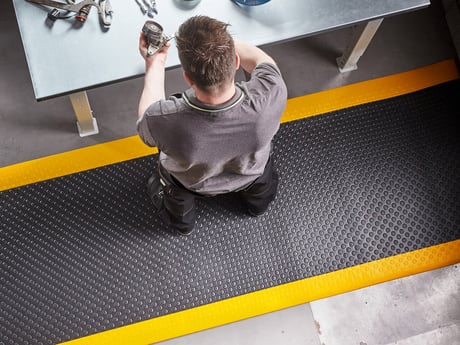
Anti-fatigue mats allow the muscles to subtly contract and expand as they adjust to the flexibility of the mat and work to keep balance; this small movement is enough to significantly improve blood flow and oxygen to the heart as well as evenly distributing pressure throughout the lower limbs, thereby reducing the strain on muscles and joints.
While fatigue matting will not completely eliminate the problems caused by standing for hours at a time, it can significantly reduce both short-term and long-term effects, including aches, stiffness and chronic pain.
What are the health benefits of anti-fatigue matting?
- Improve blood circulation
- Encourage better posture
- Relieve pressure on the spine and back muscles, resulting in less lower back pain
- Reduce joints stiffness by promoting minor but regular shifts in standing position
- Lower the energy used by supporting muscles, relieving muscle fatigue
- Ease tension in the shoulders and neck, thereby reducing the likelihood of headaches
- Relieve foot pain and pressure
- Provide thermal insulation from cold floors, which otherwise increase fatigue
Who should use anti-fatigue mats and where?
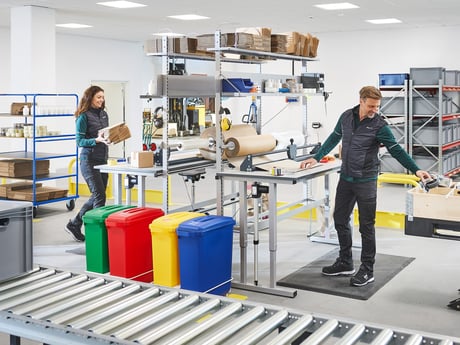
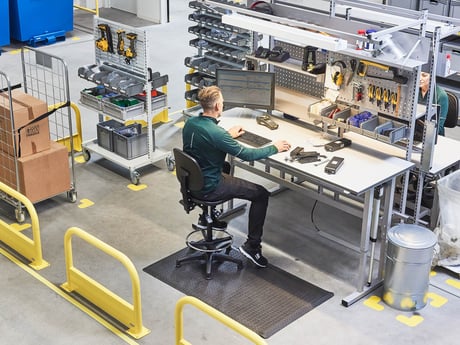
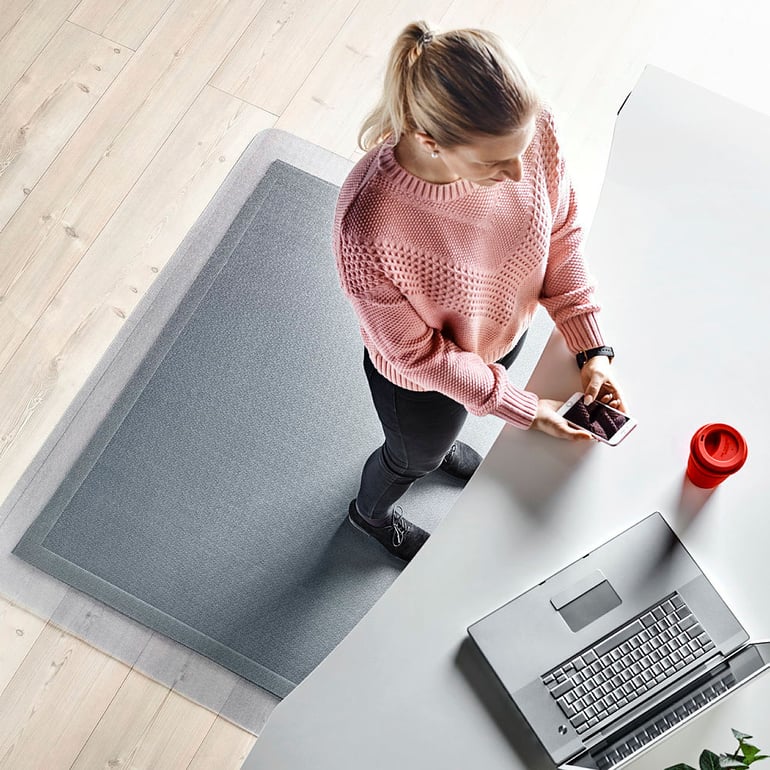
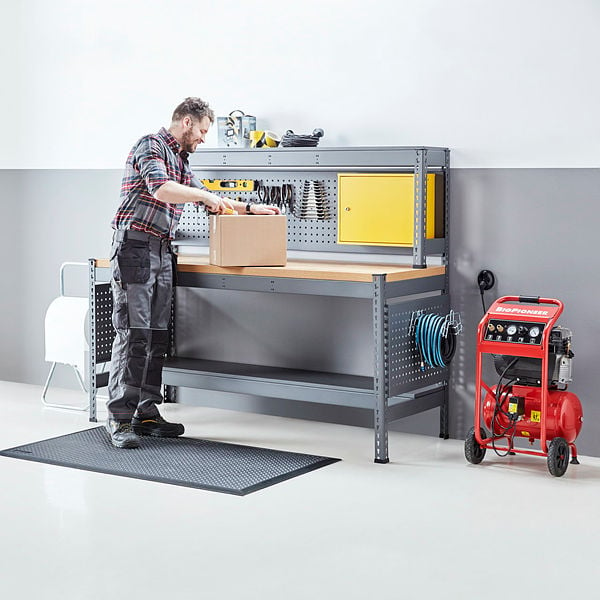
Anti-fatigue matting is a worthwhile investment anywhere that workers will be standing for long periods, whether on shop floors or production lines, in hair salons or workshops. They are also recommended for use in offices with sit-stand desks. However, ergonomic mats are particularly necessary with cold hard floors, such as concrete floors to reduce impact and maintain comfort.
To further protect your staff, you should consider the environment in which workers are standing in order to get the right mat. If you have workers standing for prolonged periods in wet or oily environments, for example, then you should select an industrial mat with both non-slip and anti-fatigue properties; a standard non slip mat is not a suitable substitute for anti-fatigue matting as it is not designed to provide the same underfoot support or health benefits as a proper anti fatigue industrial mat.
Is there proof that anti-fatigue mats work?
Yes, and it is backed by science. A number of scientific studies have confirmed the health and productivity benefits of anti-fatigue mats in the workplace.
A 2012 study conducted by Professor George Havenith and Lucy Dorman from the Department of Human Sciences at Loughborough University showed statistically significant benefits to participants standing on anti-fatigue mats when compared to standing on a concrete floor, with particular benefits to the lower and upper legs and lower back. This is supported by the study carried out by Professor Redha Taiar, Director of the Biomedical Laboratory at the University of Reims (2011), which recognised that levels of pain and discomfort were lower when using an anti-fatigue mat than when standing on cold, hard floors.
Employer benefits: why it makes business sense
- Fewer injuries and sick days: Over two million working days are lost in the UK every year due to injuries linked to prolonged standing. Improving standing conditions can help reduce absenteeism.
- Higher productivity: Comfortable employees are more focused and less prone to mistakes, which can reduce the risk of workplace accidents.
- Happier staff: Back pain is one of the most common complaints among workers who stand all day. Minimising this can improve morale and reduce staff turnover.
- Cost savings: Lower injury rates mean less money spent on workers' compensation claims and time lost to recovery.
How to choose your mat
Even once you decide that an anti-fatigue mat is the way to go, there are a number of factors to take into consideration. Ask yourself the following questions. Choosing the right one depends on your workspace needs, comfort preferences, and the level of support required. Key factors to consider when selecting a standing desk mat are:
- Material – Foam, gel or rubber. Foam mats offer soft cushioning, gel mats provide better support, and rubber mats are highly durable.
| Feature | Foam Mat | Gel Mat | Rubber Mat |
|---|---|---|---|
| Best For | Office workers | Long standing periods | Industrial workspaces |
| Comfort Level | Medium | High | Firm |
| Durability | Moderate | Good | Very High |
| Support | Soft & Cushioned | Balanced Comfort | Firm & Supportive |
- Thickness – A good anti-fatigue mat should be thick enough to provide support but not so soft that it causes instability.
- Surface texture – A non-slip surface ensures safety and prevents unnecessary movement while standing.
- Portability – Lightweight mats are easier to move when transitioning between sitting and standing.
- Size – Make sure the mat fits well within your workstation space without restricting movement.
Additionally, ask yourself:
- If in a wet area, what substances are used in the area the mat will be placed? Does it need to be suitable for just liquids or for oils and grease as well?
- What type of floor will it be used on? Take into consideration the thickness of the mat; the colder and harder the floor, the thicker the mat should be.
- How many hours do workers have to stand? Again, the more time spent standing, the thicker and more heavy-duty the mat should be.
- Is it for permanent or temporary installation?
- Do you need safety edging?
- Will the mat be in a customer-facing environment, such as a shop floor? In these areas you may also want to consider the appearance of the mat.
- Are there any other special requirements such as ESD properties, weld resistance, anti-bacterial properties for food areas, etc.?
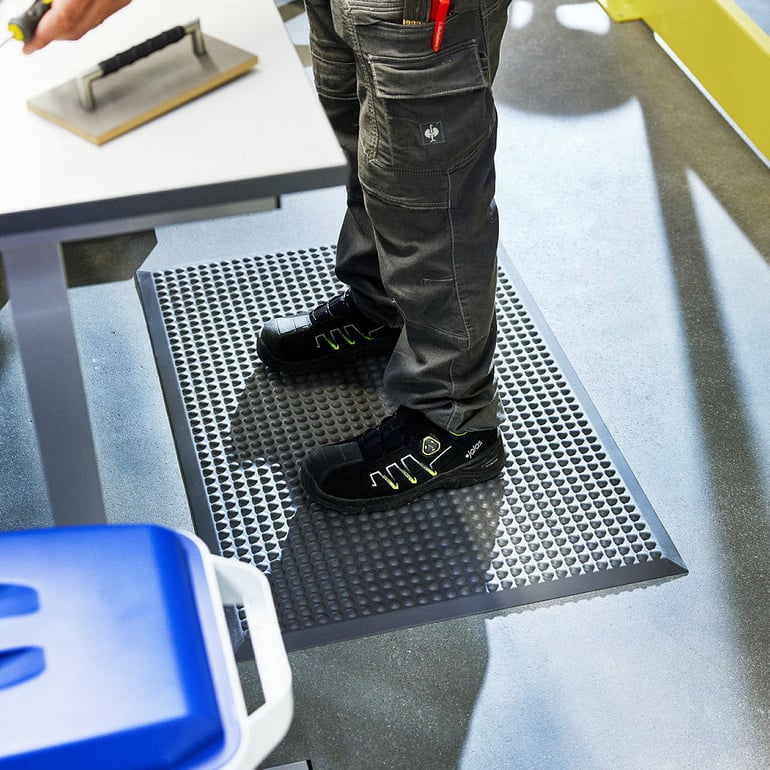
Don’t risk your employees’ health. Take a stand on standing
Whether it’s an anti fatigue mat for standing desks, industrial mats for factories or cushion mats for retail floors, investing in the right matting is a simple step that makes a big difference.
If you need any more advice our customer service team is here to answer any questions you may have and will happily recommend the best anti-fatigue solution for your requirements.
Why risk your employees’ health when the solution is so simple?
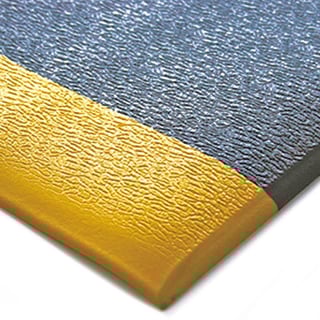
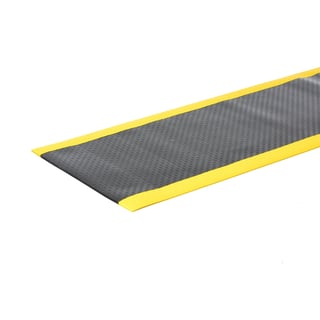
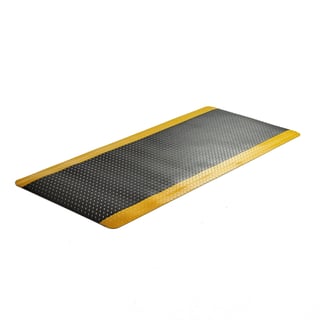
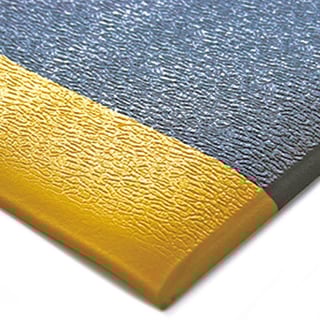
Our most popular anti-fatigue mats

FAQ
- Yes. Anti-fatigue mats are designed to encourage subtle muscle movement, which improves circulation and reduces pressure on the legs, feet and lower back. Scientific studies have shown they significantly reduce discomfort compared to standing on hard floors such as concrete.
- While it’s recommended that workers don’t spend more than 30% of their working day standing, this isn’t always practical. Anti-fatigue mats are particularly beneficial for employees who stand for several hours at a time, helping to reduce fatigue during long shifts.
- They can, but it’s important to choose the right type. In wet, oily or high-risk environments, industrial anti-fatigue mats with non-slip surfaces, drainage and chemical resistance should be used. Standard non-slip mats are not a suitable replacement, as they don’t provide the same ergonomic support.
- Yes. Anti-fatigue mats are commonly used with sit-stand desks to improve comfort during standing tasks. They help reduce strain on the lower body and encourage better posture, making them a simple addition to office environments.
- The right mat depends on where and how it will be used. Consider factors such as floor type, standing time, environment (wet or dry), required thickness, slip resistance and whether safety edging is needed. The more time employees spend standing — and the harder or colder the floor — the more supportive the mat should be.