- AJ Products UK
- Blog: Tips to Inspire Happiness at work
- Tips & trends
- Increase industrial safety with clear signage and floor markings
Increase industrial safety with clear signage and floor markings
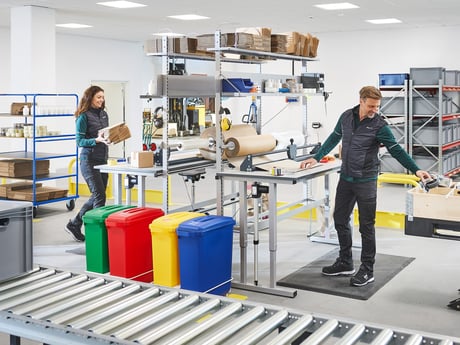
Ensuring workplace safety is an employer's responsibility, both by providing support and maintaining a secure physical environment. Marking floor lines in hazardous areas is one way to enhance employee safety and well-being. When signs and floor markings are used effectively, they contribute to a more productive work environment.
Make it easier to navigate the workplace
Clear signs and markings minimize the risk of confusion. In an organised environment, employees can quickly locate shelves and tools, creating the right conditions for strong job performance. Routines are also easier to follow, even for new and incoming staff.
Advantages of signage and floor markings in warehouses and manufacturing
- Safer vehicle and pedestrian traffic.
- Easier to find everything needed.
- Reduced risk of slipping and other personal injury.
- More efficient use of floor space.
- Clarity during evacuations and drills.
Safety Awareness
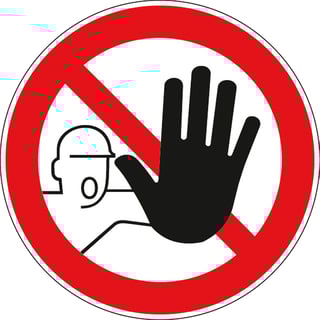
Clear visual information helps both employees and visitors understand which areas are risky and what behaviors are expected, such as wearing hearing protection, hard hats or exercising caution around flammable materials. Well-placed signs and floor markings provide an immediate overview of the workplace layout and flow, enhancing safety through simple, effective guidance.

Effective use of floor markings
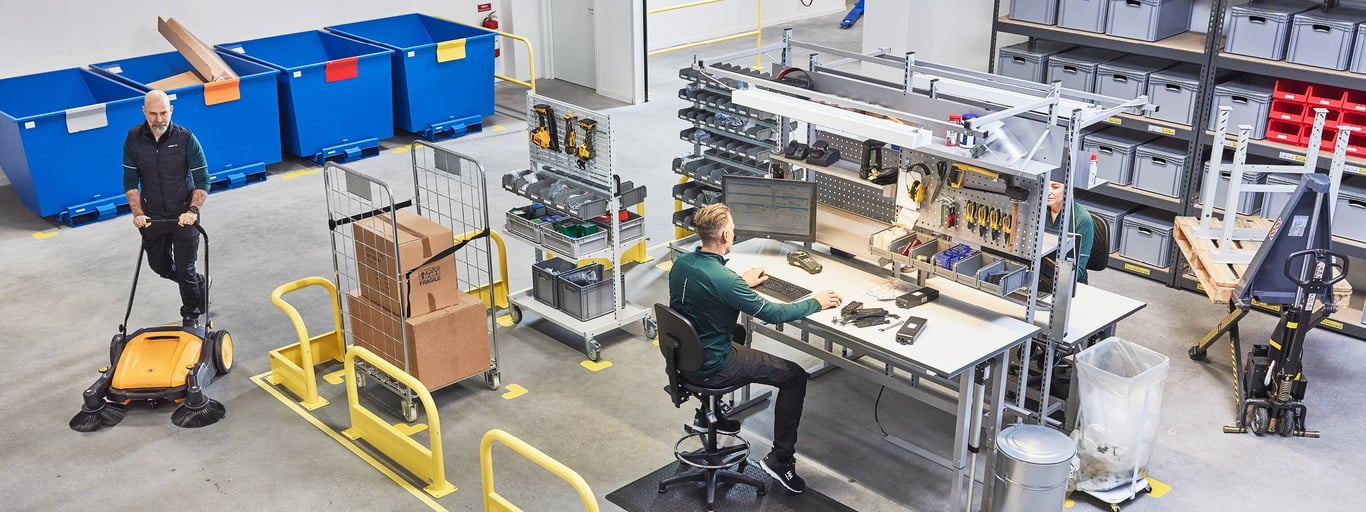
Footpaths and traffic routes
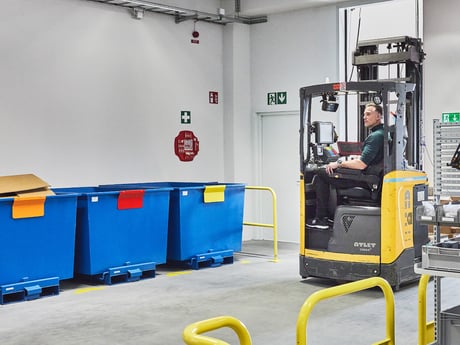
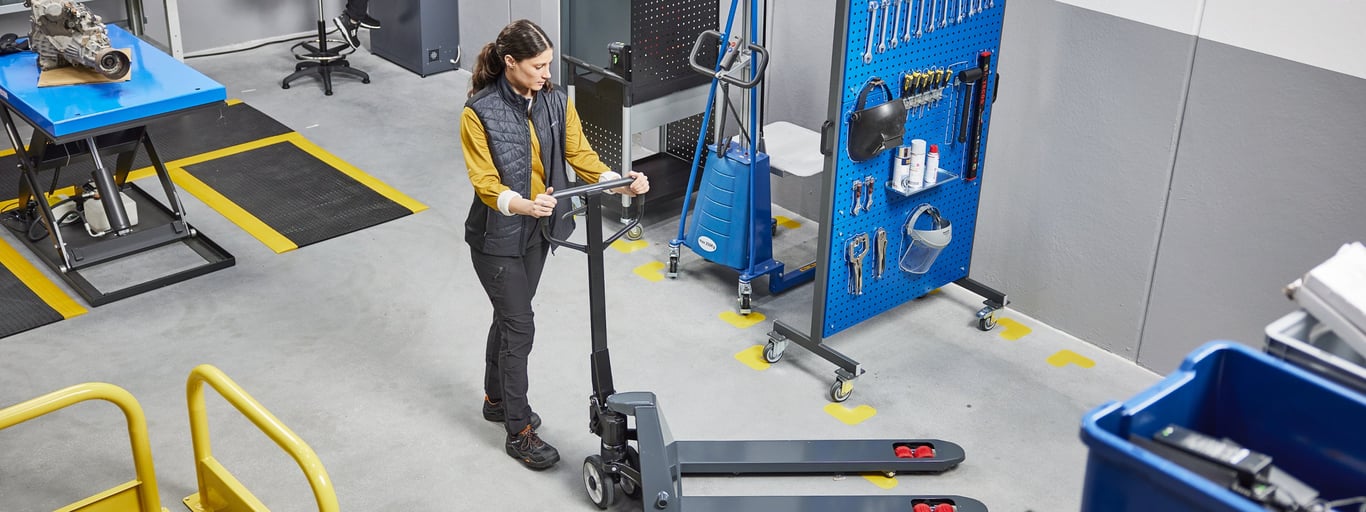
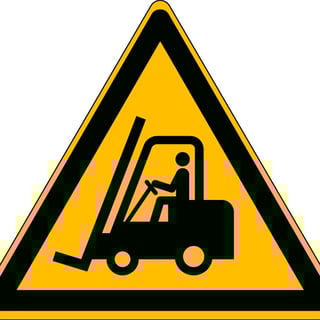
Truck / forklift traffic poses a safety risk even for seasoned employees. Clear floor markings and colour-coded lines help keep vehicle and pedestrian pathways separate, allowing drivers to operate with reduced risk. Creating well-defined traffic zones in the workplace makes it easier for employees to follow safety protocols, fostering better teamwork, well-being and productivity.
Tip! Use industrial mirrors to improve visibility in areas with blind spots or limited visibility; intersections, corridors, and large warehouses. This allows for early detection of hazards, vehicles or pedestrians, helping prevent collisions.
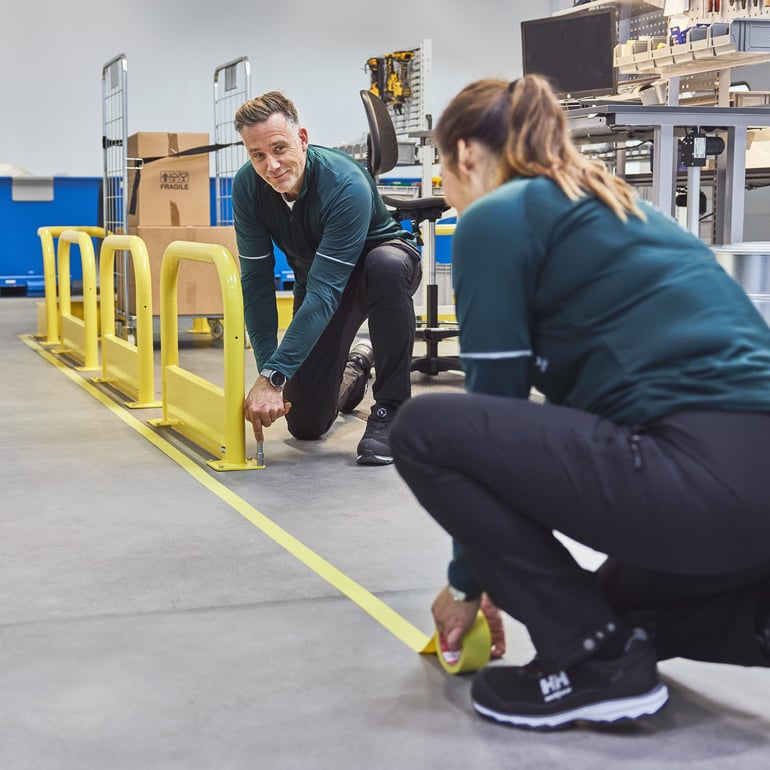
In some areas, floor markings on traffic routes may need to be supplemented with additional safety measures, such as guardrails or barriers, which are particularly useful in narrow spaces or where there are height differences.
Safety Distances
Line markings can show the safe distance to maintain between pedestrian and traffic routes, ensuring employee safety. They can also define areas around essential equipment or hazardous work zones, clearly highlighting potential dangers in the workplace. These markings are especially valuable in areas where risks may not be immediately visible or are hard to detect from afar.
Work Zones
Frustrated with tools and equipment ending up in the wrong places? Use marking tape and floor paint to create dedicated work zones. Mark tools and machinery with matching colors so employees can easily identify which equipment belongs in each area. A clear colour-coding system allows workers to associate specific colors with particular tasks or zones, keeping tools where they’re needed. This system can also help distinguish different production stages, like in-progress products versus finished goods.
Tip: Label storage areas with numbers or letters on floors and shelves, add aisle signs and label trays and boxes. This helps staff navigate quickly, reducing errors and saving time spent searching for items.
Tips for efficient warehouse logistics
Supplement to Signage
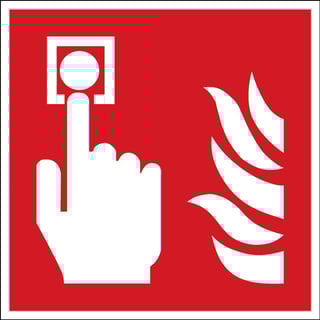
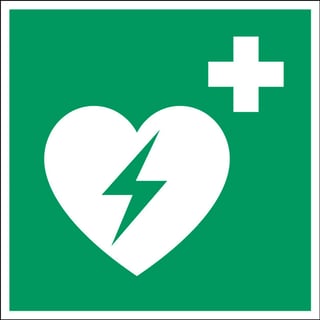
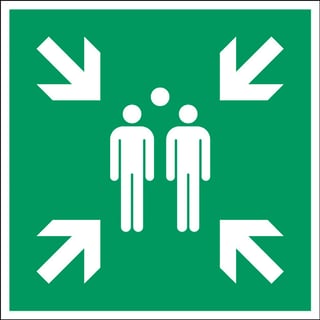
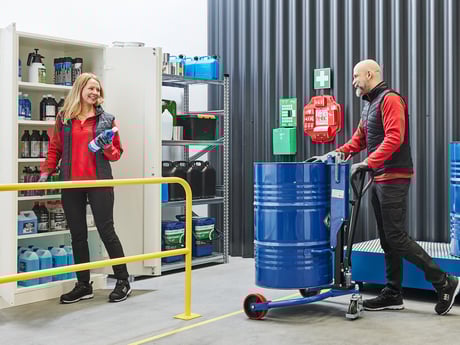
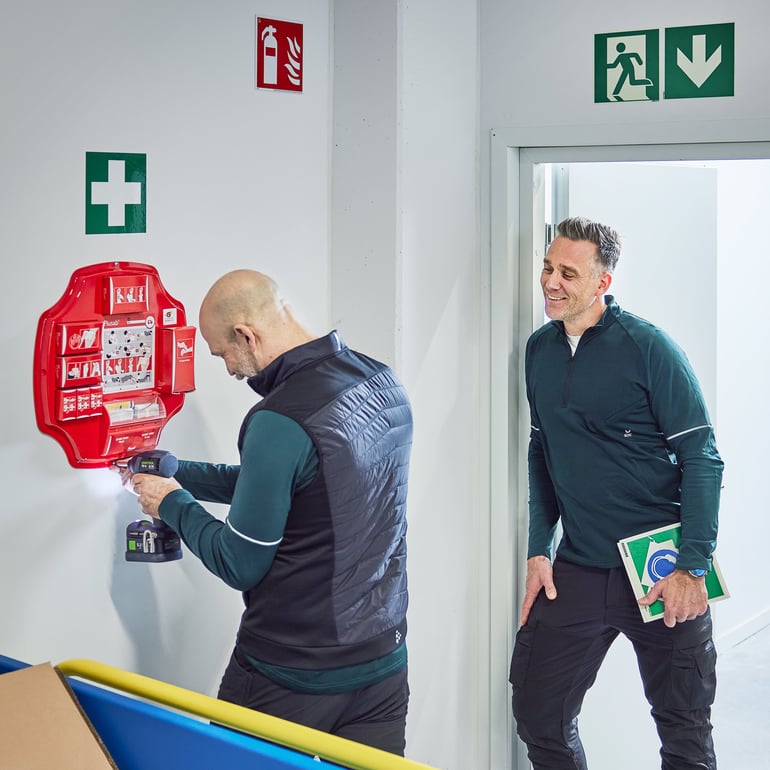
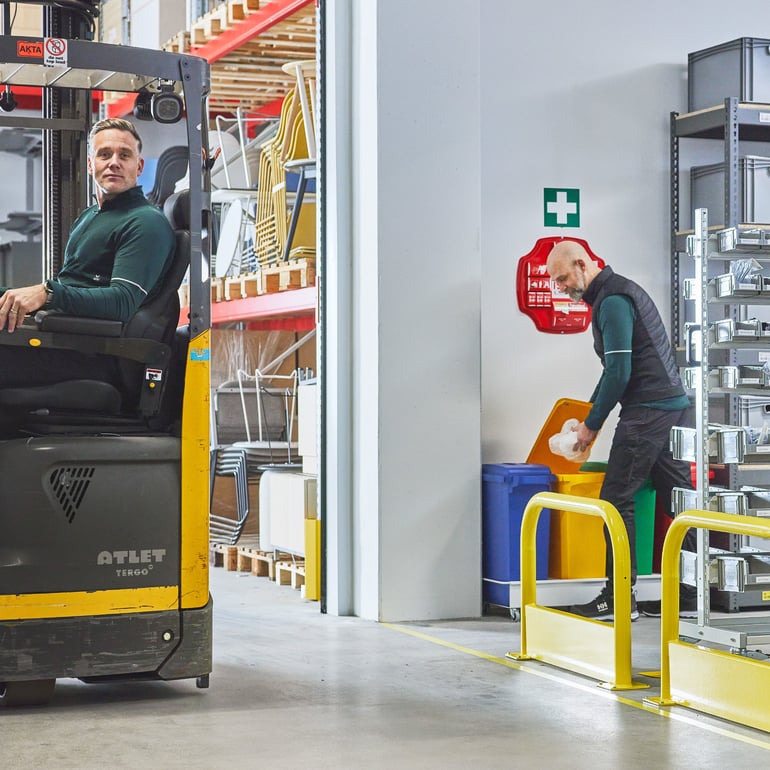
In the event of a fire or accident, equipment and escape routes must always be easily accessible. In addition to clear signage, floor markings can be used to indicate areas around emergency exits, fire equipment and first aid stations that need to remain clear for quick access.
This approach also applies to machinery, traffic routes and areas that may be unsafe or hazardous. Signs should be clear and prominently displayed - illuminated if they are in poorly lit areas. Floor markings serve as a practical enhancement, reinforcing the messages conveyed by the signs.
A great idea is to use floor markings to identify recycling stations and waste containers. After emptying, these items can be easily returned to their designated spots. This same principle can be applied to trolleys and other equipment to streamline the workflow between tasks.
Choose the right type of floor marking
The type of floor marking that is best for your warehouse, manufacturing or industrial operation depends entirely on your specific needs and working conditions. Factors to consider include safety requirements, budget, floor material and the level of wear and tear the markings will experience.
Spray Marking
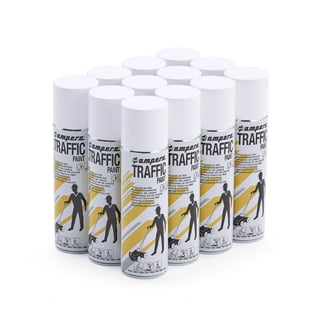
Floor marking paint is versatile and can be used both indoors and outdoors, making it ideal for work areas, goods reception and transport routes. This paint adheres well to various surfaces, including concrete, asphalt and tarmac. It often dries quickly and provides good coverage. While spray paint can be applied by hand, using a line marking trolley is the easiest way to paint long lines or multiple markings efficiently.
Tips! Don't forget to block off unsafe or newly painted areas with cones or tape.
Anti-slip tape
Is your floor frequently wet, greasy or slippery? If so, anti-slip tape is an excellent alternative to traditional floor tape or line markings. It can be used to secure steps, platform edges and more, enhancing safety in slippery areas.
Marking Tape
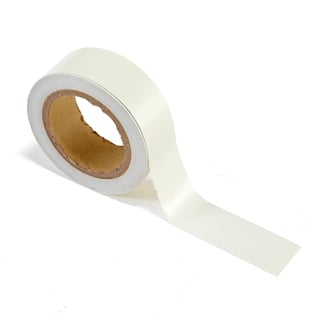
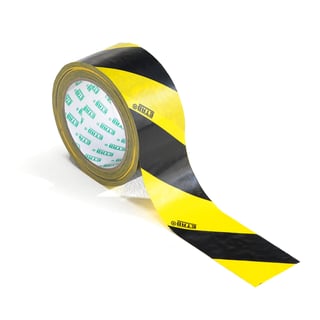
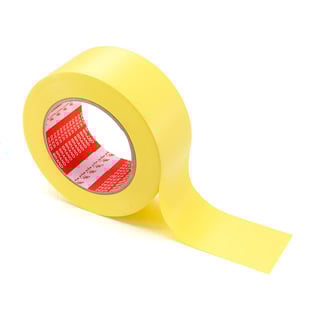
Durable marking tape is just as effective in high-traffic areas as spray paint. Floor marking tape is a practical alternative, especially for temporary markings, as it is easier to move, change or remove. Additionally, using tape eliminates the need for production stops or closures for drying time, allowing work to continue smoothly. Most industrial-grade marking tapes adhere well to smooth surfaces and offer a clear, permanent colour.
Luminous / Glow in the Dark Tape
Consider luminous tape for marking escape routes, steps, beams and ledges in case the workplace loses power.
Don't forget - maintenance of line markings
Areas with heavy foot and machinery traffic and frequent use of pallet jacks, trolleys etc can wear down your floor markings. Additionally, industrial dust and dirt can cause colours to fade over time. To ensure safety, regularly check that markings remain clear and promptly fill in any that have worn away. Poorly visible or damaged lines do not meet the highest safety standards.
What does EU directive 92/58/EEC say?
The European Parliament's directive 92/58/EEC mandates that employers display signs and utilise clear signals and warning markings to ensure health and safety at work. Markings for pedestrian and transport routes, as well as designated work zones, help support compliance with this directive.
The directive outlines guidelines for various forms of communication, including light, sound, hand signals and verbal messages, along with different signs, symbols and colours. For more information on guidelines, you can refer to the Health and Safety Executive (HSE).
Summary - The Importance of Signs and Floor Markings
Signs and floor markings do more than just prevent accidents; they also contribute to employees' sense of safety in the workplace. With clear visual guidance, both those working within the designated areas and those passing through can perform their tasks correctly and without risk. This clarity fosters teamwork, as staff must collaborate in shared spaces. When employees feel secure and satisfied in their environment, the likelihood of successful production increases.