- AJ Products UK
- Inspiration
- Improving the work environment
- The researcher: When breaks at work are forgotten, the cost is high
The researcher: When breaks at work are forgotten, the cost is high
Many workplaces recognise the importance of taking time to recharge, but fewer make breaks a natural part of the working day. That’s a missed opportunity. Research shows that short breaks affect how we feel, how well we work and how we interact with others.
“We can’t run on empty batteries,” says researcher and author Lina Ejlertsson.
In some workplaces, breaks are still seen as an interruption to work rather than something that helps people work better. But carrying on without taking time to recharge rarely works in the long run.
"In the past, discussions about recovery focused almost entirely on our free time (meaning what we needed to do outside work to cope with the demands of our jobs). But we now know it's not that simple. Recovery needs to happen both at work and in our free time. You can't give 100% all day and expect everything to be put right once you get home", says Lina Ejlertsson, PhD in Public Health, who has researched recovery in everyday working life at Lund University and is the author of the book Energireceptet.
She defines recovery as restoring the resources we use throughout the day. For this to be happen, the workplace needs to make room for it. Breaks shouldn't be something we take only once everything else is done, they’re an essential part of making the working day work.
"I often use the analogy that we have batteries that need recharging. We can't work on empty batteries. With recovery, we can feel better, be happier and have more energy. Naturally, that also enables us to focus better and work more efficiently."
Workplaces need to make breaks possible
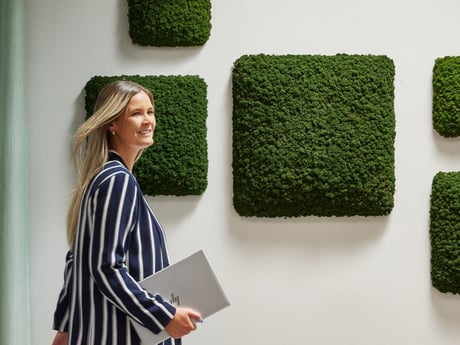
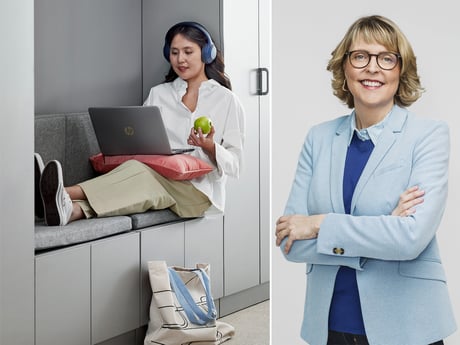
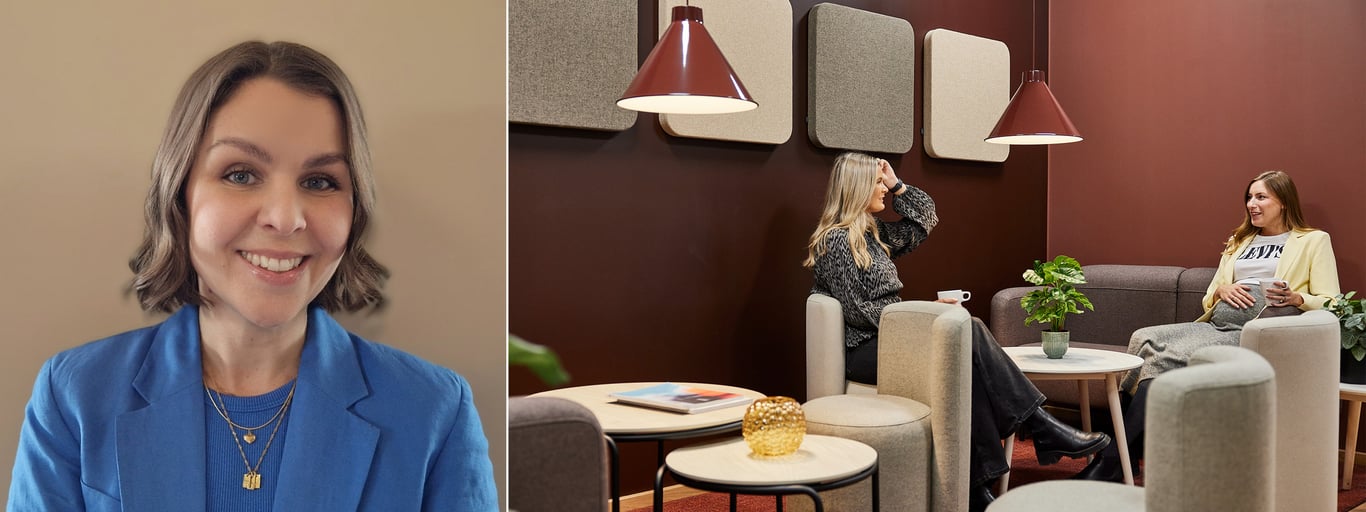
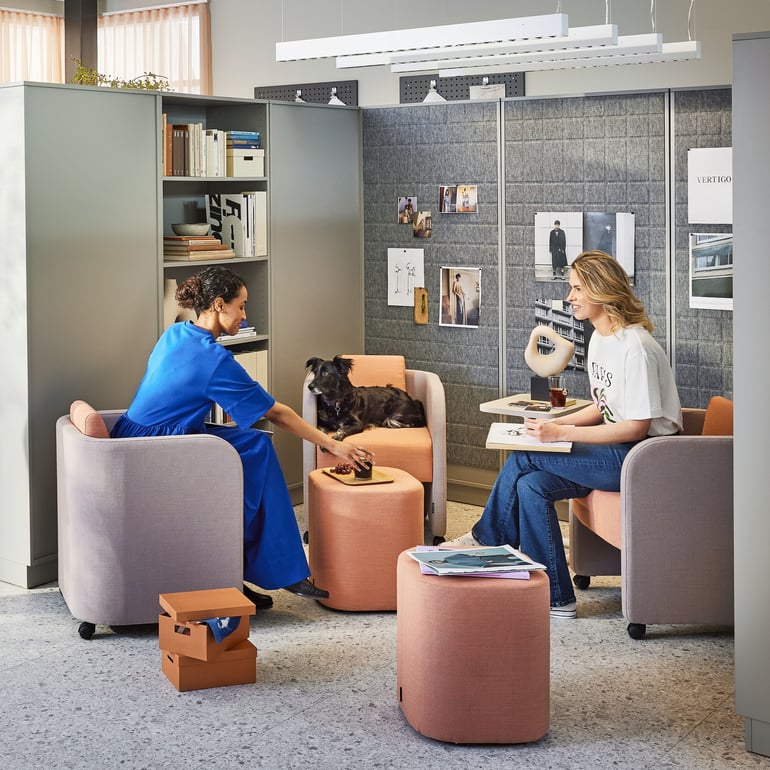
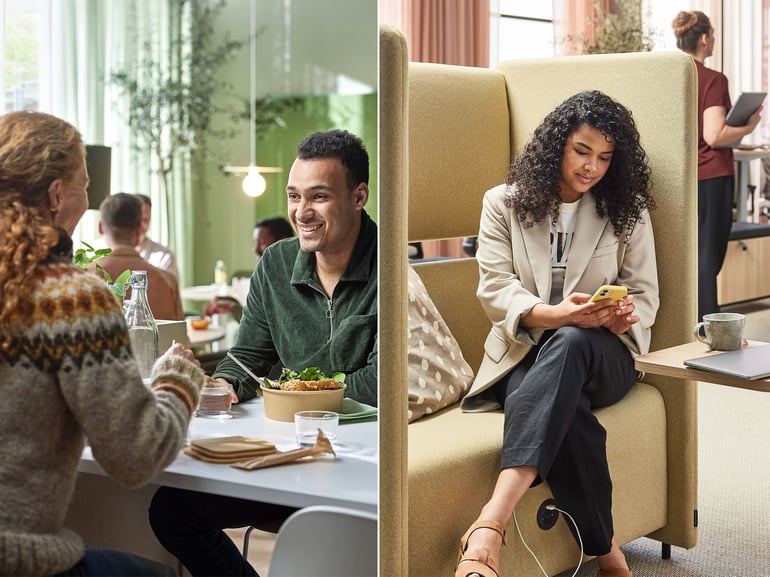
So how can employers approach this? Lina Ejlertsson suggests that workplaces looking to support recovery should offer a variety of environments: spaces for social interaction, comfortable seating for a quick break, and quieter, more secluded areas where people can relax in peace. Natural light, greenery, and other elements of nature can also help create a more relaxing environment.
"We can clearly see that different people need different things. Someone who works in a customer-facing role, spends the day in meetings or is constantly surrounded by people might not find the noisy lunchroom the best place to recharge. In these cases, there need to be other options available."
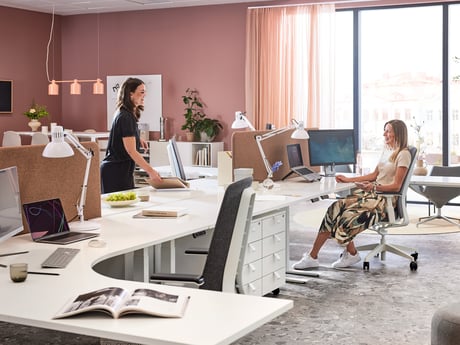
At AJ Products we offer furniture and equipment for a wide range of workplace environments. Our range includes solutions for different types of break spaces, from lounge areas for a quick break between meetings to quieter spaces for rest and privacy.
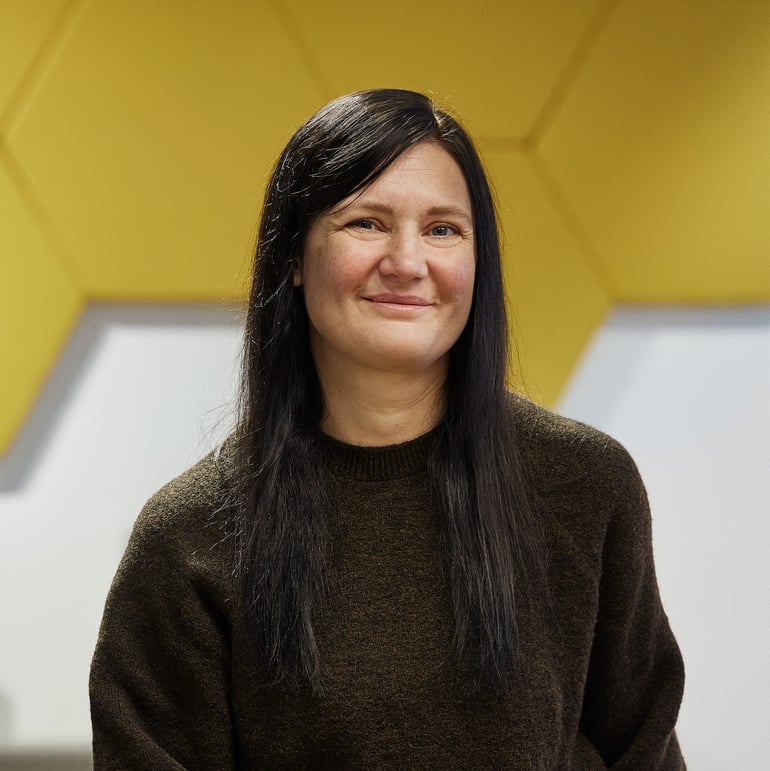
"In recent years, there’s been a growing awareness of how important it is to recover during the working day. A well-planned workplace needs to offer both social spaces and quieter, more secluded areas, so that people can find the space they need to recharge. We want to help create environments that support recovery and meet different needs”, says Elisabet Nilsson, Product Manager at AJ Products.
Company culture determines whether breaks actually happen
However, having the right physical environment isn’t enough to make sure people actually take breaks. "Organisational conditions must also be in place, such as a reasonable workload and scheduled time for breaks. Furthermore, there needs to be a culture that signals that taking breaks is acceptable and where restorative activities are encouraged", Lina Ejlertsson highlights. "In some workplaces, the notion still lingers that someone taking a break is slacking off."
"A crucial point is that simply telling employees to take a break isn't enough. You need to look at the workplace culture and ask: how do we view taking breaks? If a manager never takes a break themselves, they send mixed signals", says Lina Ejlertsson.
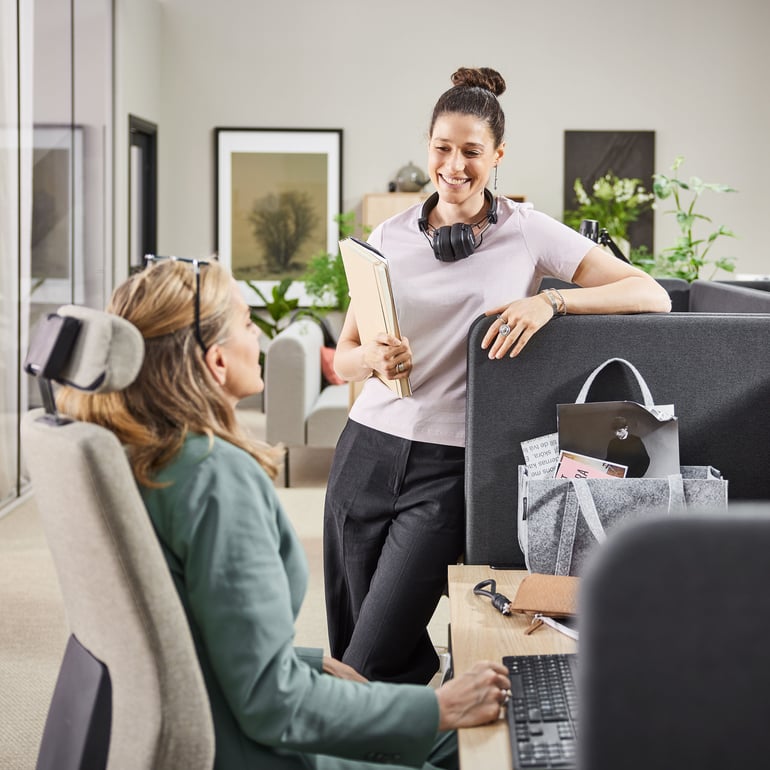
When there is room for recovery during the working day, the benefits are felt not only by the individual taking a break, but also in the way the whole team works together.
"At group level, we can see clear differences in the working climate. It can become more open and secure when there is an accommodating attitude towards recovery and breaks."

Micro-breaks everyone can start today
Short breaks during the working day can make more of a difference than you might think. According to Lina Ejlertsson, micro-breaks can help us recharge and ease physical or mental strain as it builds up. The key isn't how long the break lasts, but making sure you take it.
-
Look out of the window for a few seconds
-
Stand up and stretch
-
Step away from your usual surroundings for a moment
-
Take a few deep breaths
-
Have a chat with a colleague about something unrelated to work