- AJ Products UK
- Inspiration
- Improving the work environment
- Why do companies need commercial matting?
Why do companies need commercial matting?
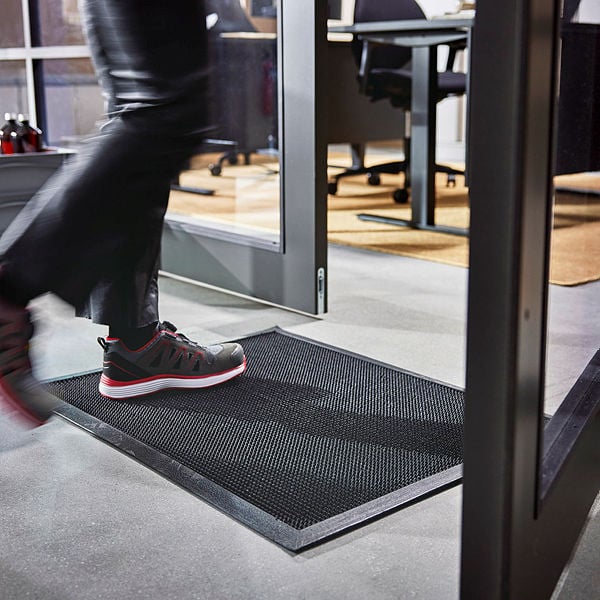
Entrance mats: keep workspaces clean
Entrance mats act as the first line of defence against dirt, dust, and debris brought in on shoes. A good entrance matting system typically works in two stages: a scraper mat just inside the door to remove grit and moisture from footwear, followed by a wiper mat further into the entrance to absorb any remaining damp. Getting this right reduces slip risk on hard flooring, cuts down on cleaning costs, and gives visitors a tidier first impression of your building.
Entrance mats are usually sized to the doorway and chosen based on footfall; a small reception might only need a modest coir or rubber-backed mat, while a busy warehouse loading bay benefits from a longer run of heavy-duty barrier matting.
AJ Products offers a wide range of entrance mats in different materials, sizes, and designs, making it easy for businesses to find solutions that meet their specific needs.
Anti-slip rubber mats: safety first
Chair and desk mats: protect your floors
Office floors often endure damage from moving chairs and heavy furniture. Chair and desk mats protect surfaces from scratches, scuffs, and dents, reducing maintenance costs while extending the life of flooring.
Beyond floor protection, the right mat also makes chairs easier to move — a hard, smooth-surfaced mat lets castors glide rather than catch, which supports better posture and reduces the small daily strain of shuffling a chair in and out. Mats are available for both carpeted and hard floors, so it's worth checking which type suits your flooring before buying.
Anti-fatigue mats: support employee wellbeing
Gymnasium mats: comfort and relaxation
Heavy duty industrial mats: durable solutions for demanding workplaces
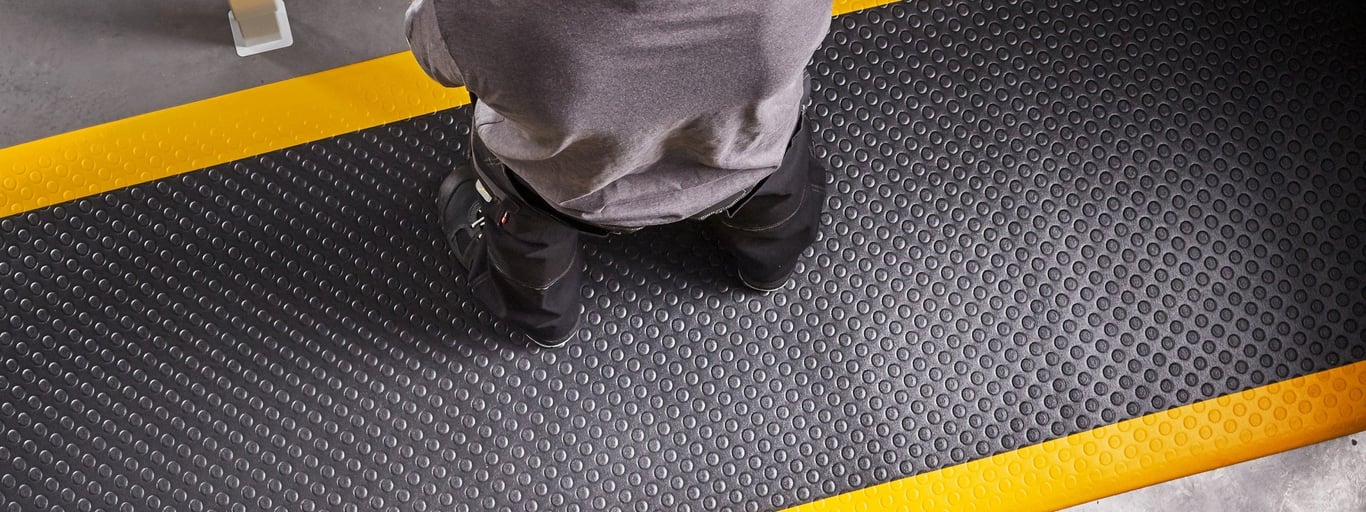
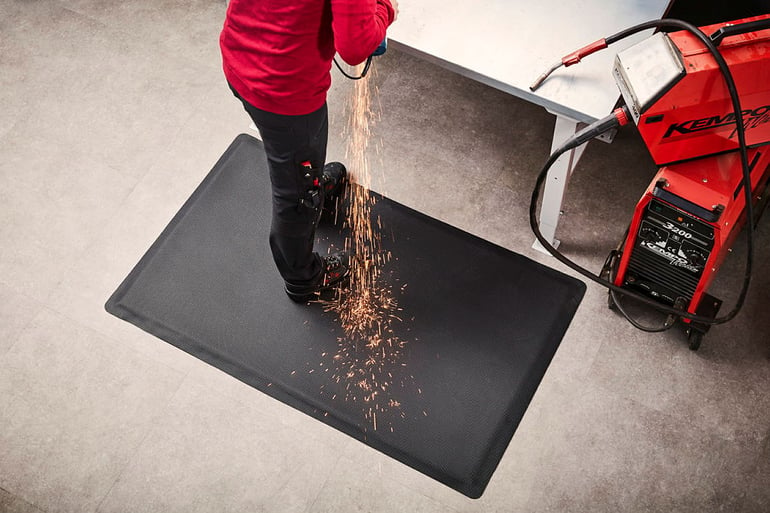
Industrial floors face unique challenges, including heavy machinery, forklift traffic, dropped tools and constant foot traffic. Heavy-duty mats are built from thicker, more durable materials specifically to withstand this wear and tear , while still offering underfoot comfort and slip resistance for the people working on them.
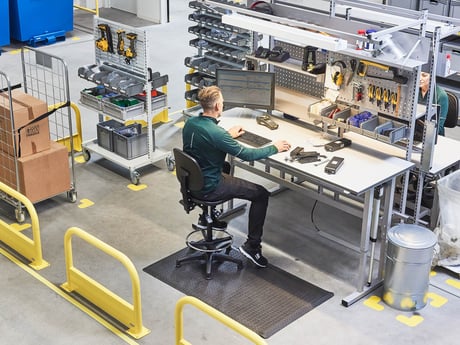
These mats are often specified by role rather than just location: welding mats built to resist sparks, ESD matting for sensitive electronics work, or drainage matting for wet production areas. If your team spends long shifts standing on hard industrial floors, it's also worth reading our guide on choosing the right workplace mat for demanding environments, which looks at matting by setting; workshops, wet rooms, kitchens and more.
Find the right commercial mat for your business
With so many mat types available, the right choice really comes down to two questions: what job does the mat need to do (clean, protect, cushion or grip), and what environment will it sit in (wet, dry, high-traffic, industrial)? Start there and the right category usually becomes clear.
Whatever type of mat you need, you'll find it online at AJ Products — from entrance and anti-slip matting to anti-fatigue solutions and heavy-duty industrial mats. If you're not sure which is right for your business, contact us by phone, chat or email and we'll help you find the best fit.
FAQ
- Anti-slip mats are designed primarily for grip and safety in wet or high-traffic areas. Anti-fatigue mats are designed for comfort during long periods of standing. Some industrial mats combine both properties — see our anti-fatigue matting guide for more on choosing between them.
- A two-stage system works best: a scraper mat to remove grit and moisture at the door, followed by a wiper mat to absorb any remaining damp further inside.
- Generally, yes. Offices tend to need chair/desk protection and entrance matting, while warehouses and workshops need heavy-duty, oil- and chemical-resistant matting built for machinery and foot traffic.
- Yes, anti-slip matting in particular is one of the simplest ways to reduce slip and trip risk in areas prone to wet or oily floors.
- Heavy-duty industrial mats are designed to withstand the weight of tools, machinery and frequent foot traffic, protecting both floors and equipment.