- AJ Products UK
- Inspiration
- Buying guides
- Conference chair mistakes and how to avoid them
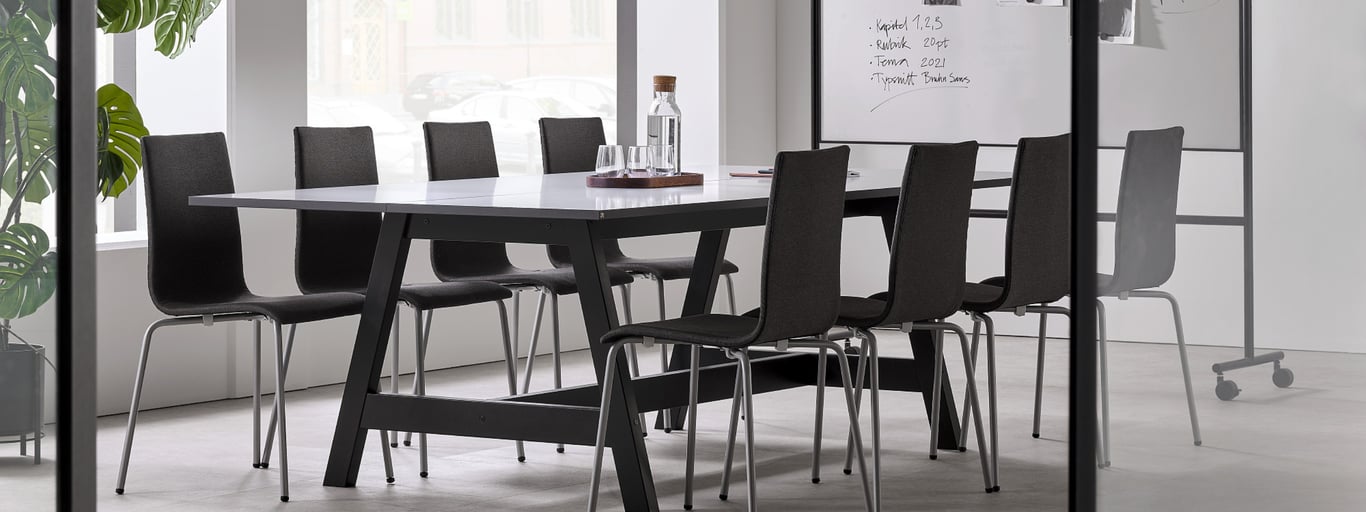
Conference chair mistakes and how to avoid them
The wrong conference chair rarely announces itself in the showroom. It announces itself about forty minutes into a planning session, when someone starts shifting in their seat and concentration starts to slip.
Over 50 years working with UK facilities managers, we've seen the same six mistakes in conference chair selection come up again and again. They're the patterns that emerge from thousands of orders and real-world feedback.
Buying meeting room chairs feels like a straightforward decision: pick something that looks professional, fits the room, and arrives before the next board meeting. But there are a few things worth settling before you order, because the mistakes tend to be the kind you only notice once the chairs are in place and the meetings have started.
1. Speccing for your quickest meeting, not your longest
Your average meeting might be thirty minutes. So you spec accordingly: something functional, reasonably padded, not too expensive. Then the quarterly review lands and thirty minutes' worth of padding has to last four hours.
The longest regular meeting your room hosts is what tests a chair. Thin padding, a shallow backrest, and no arms are minor inconveniences in a quick catch-up. In a long session, they affect concentration, restlessness, and ultimately how well the meeting goes.
Our recommendations:
- Padded seats and backrests for sessions that regularly run past an hour
- Conference chairs with arms to reduce shoulder fatigue during longer discussions
- A subtle flex or recline that allows natural movement without becoming distracting
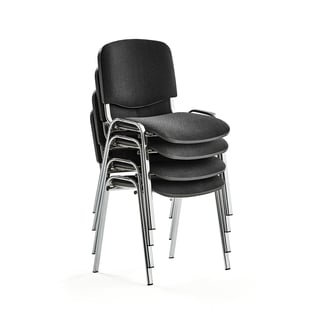
Our SIMCOE stackable conference chair is a good example of a chair that handles both: padded armrests, a wider seat, and the stacking benefit for rooms that need to clear between sessions.
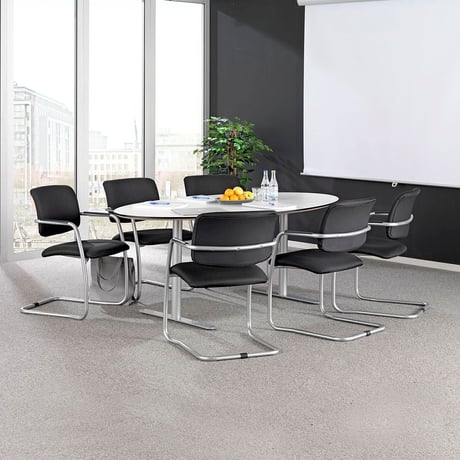
2. Buying chairs that only suit one kind of meeting
Most conference rooms host more than one type of meeting. Boardroom discussions, training sessions, team briefings, client presentations: often in the same room, on the same day. A fixed set of heavy upholstered chairs works well for a formal board meeting and becomes a twenty-minute problem the moment someone needs to rearrange for a workshop.
Chairs that can't stack, link, or move easily restrict how the room gets used, and that has a real impact on how meetings run.
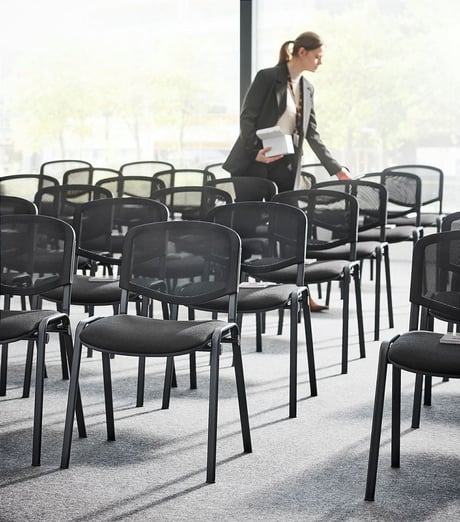
What to look for:
- Stackable conference chairs for rooms that flex between uses
- Linking devices to form rows quickly for presentations or training
- Lightweight frames that one person can move without help
Our NELSON conference chair stacks neatly in fours, links for rows, and works as well around a board table as it does in a training layout. If the table needs to flex too, our folding conference tables are worth considering alongside.
3. Not checking chairs against the table before ordering
This is the mistake that shows itself on delivery day. Arms that won't tuck under the table. A seat height that leaves people craning slightly upward. Chair widths that look fine on screen but leave the room feeling cramped at full capacity. A simple measurement checklist prevents costly mismatches.
Seat height to table height (aim for roughly 280mm difference)
-
- Measure your table height from floor to tabletop surface. Most UK conference tables sit at 730-750mm.
- Measure the chair's seat height from floor to the top of the seat cushion (not the backrest). Aim for 450-480mm.
- Calculate the difference. If your table is 740mm and you order a chair at 450mm, that's a 290mm gap, comfortable for most people.
A 250mm gap forces users to crane their neck downward and strain their shoulders. A 320mm gap leaves them reaching up to the table. The sweet spot is 270-300mm, which lets users rest their forearms on the table at a 90-degree elbow angle without strain. Simple enough, but easy to miss when chairs and tables are ordered separately at different times.
Armrest clearance under the table
-
- Measure the space under your conference table (the distance from tabletop to the floor support or frame).
- Check the chair's armrest height when seated. If the armrest is higher than the table clearance, it won't tuck under.
- Add 20-30mm clearance to account for the chair being pushed in.
Ordering armchair conference seating and discovering they don't fit under the table is a common mistake. This forces you to pull chairs away from the table, which wastes space and looks awkward.
Space per person (accounting for arm width)
-
- Measure the length of your conference table (e.g., 2.4m).
- Divide by the number of chairs you want: 2.4m ÷ 6 chairs = 400mm per chair.
- But chairs with armrests need 700mm per person; armless chairs need 600mm minimum.
TIP: If you're unsure, measure a chair you already have and try it at your table before ordering multiples. One test run avoids expensive mistakes.
Before you order, check:
- Seat height against table height (aim for roughly 280mm difference)
- Whether arms clear the underside of the table
- Space per person (600mm minimum for armless chairs; 700mm with arms)
TIP: Buying chairs and tables together is the simplest fix. Our conference package deals pair matched sets sized to work together.
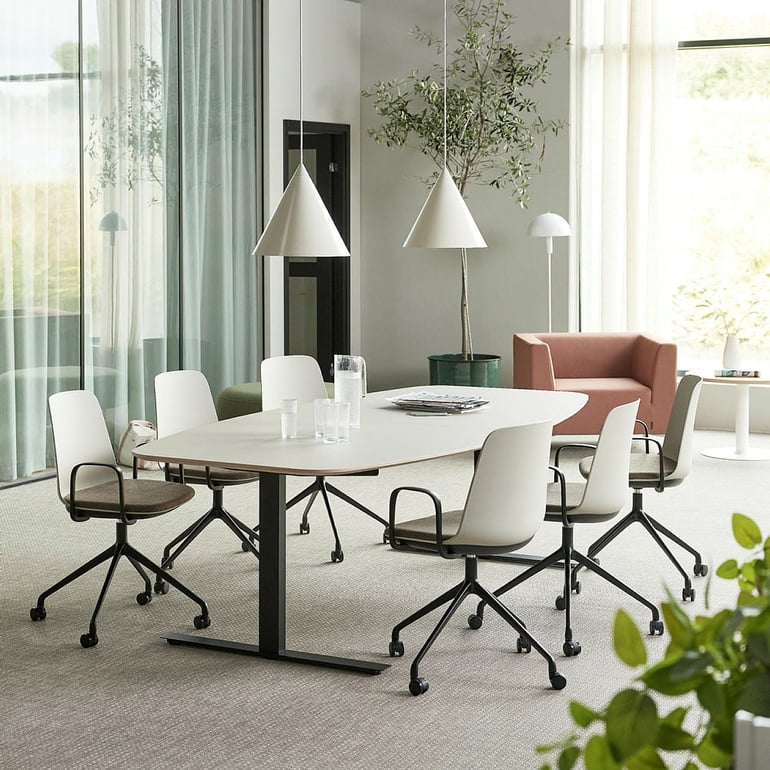
4. Underestimating room acoustics
Most people think carefully about how a conference room looks and largely ignore how it sounds. That's a mistake, particularly now that hybrid meetings make audio quality a practical requirement rather than a nice-to-have.
High ceilings, hard floors, glass partitions, and bare walls all create echo and background noise that undermines the quality of discussions. Poor acoustics mean raised voices, missed words, and fatigue setting in faster than it should.
Our recommendations:
- Fabric-upholstered chairs, which absorb more sound than faux leather or mesh
- Floor glides or castors to reduce scraping noise when chairs are moved
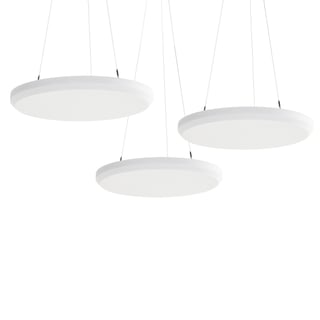
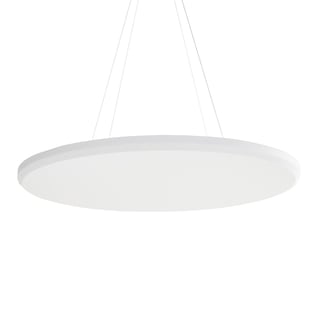
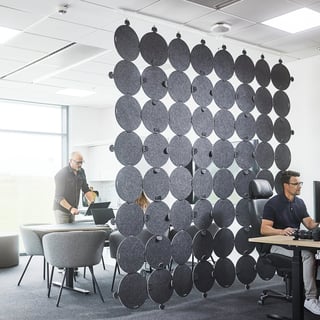
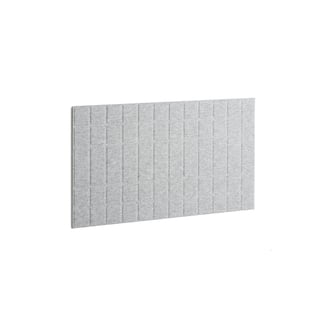
- Acoustic wall panels for rooms with persistent echo problems
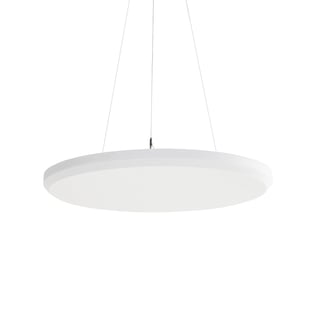
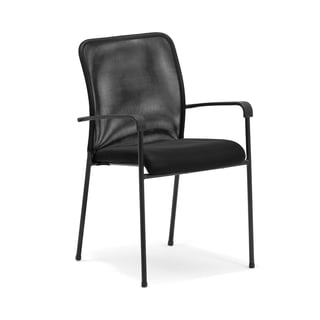
Soft furnishings do some of the work, but for serious acoustic issues dedicated panels are the proper solution. Our ENFIELD conference chair and DAWSON chair both use fabric upholstery that helps soften room acoustics alongside their other benefits.
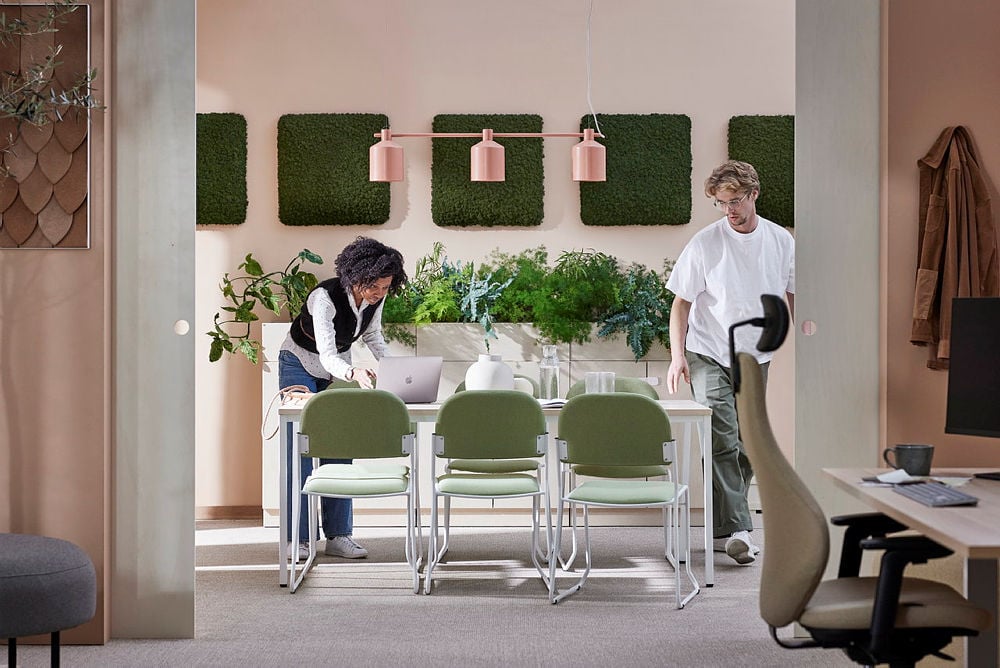
5. Overlooking what happens between meetings
How a chair performs during a meeting matters. What it is like to move, stack, and clean between meetings matters just as much.
Worth checking before you buy:
- Whether the chair stacks and to what height (ten-high stacking is typical for a well-designed conference chair)
- Whether a handle or cutout makes single-handed carrying practical
- Whether floor glides are included or available as an accessory
- Whether the upholstery can be wiped clean, particularly for high-turnover meeting rooms
If your conference room turns over every 30 minutes, chairs need to stack and unstack within 2-3 minutes. This rules out heavy upholstered seating and favors lightweight, quick-to-nest designs. If rooms turn over hourly or less frequently, you can afford heavier, more cushioned options.
6. Not balancing budget and durability
When choosing conference chairs, it’s important to look beyond the initial purchase. Chairs that wear out quickly can lead to more frequent replacements, maintenance issues, and disruption when furniture needs updating.
This is especially true in high-use spaces. A training room hosting multiple sessions each day will put far more strain on seating than a boardroom used occasionally. In busy environments, choosing chairs with durable upholstery, reinforced frames, and high-quality components can help reduce wear and extend the lifespan of your furniture. To avoid this mistake. Some budget considerations to weigh are:
- Upfront cost vs lifespan - premium upholstered chairs cost more but hold up better in frequent-use environments. Budget mesh chairs are lighter and often stackable, making them better for spaces that reconfigure constantly.
- Maintenance and cleaning - fabric chairs need regular vacuuming and occasional deep clean; mesh is easier to wipe down daily. Factor in cleaning service costs if the room is high-turnover.
- Replacement cycles - building a replacement schedule into your furniture budget (e.g., refresh 20% of seats annually) beats sudden failure and emergency orders.
- Mixing chair types - some rooms benefit from premium boardroom chairs for long sessions and budget-friendly stackable alternatives for workshops and training. This hybrid approach spreads cost and matches chairs to use.
A note on getting the room right as a whole
Chairs are one part of a conference room that works. The table, the acoustics, the lighting and the technology all affect how a meeting goes, and a well-chosen chair in a poorly designed room still leaves something to be desired.
If you're planning a full fit-out, our guide to designing a conference room for successful meetings walks through the broader decisions, including acoustics, layout, and technology. Our creating different meeting room layouts guide covers how to arrange the furniture once it's in the room. And if you're ready to browse, our full conference chairs range covers boardroom chairs, stackable options, chairs with arms, and everything in between, all backed by a 7-year guarantee.
If you're unsure which conference chair is right for your space, our customer support team is always happy to help. Our expert team can guide you through the options and help you make the right choice for your workplace.
Our top 5 best conference chairs
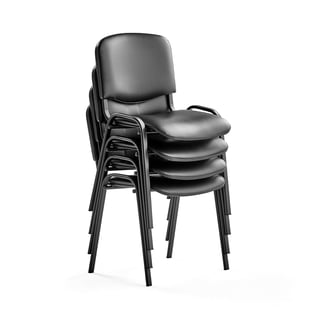
£145.00
(£36.25/each)Ex. VAT
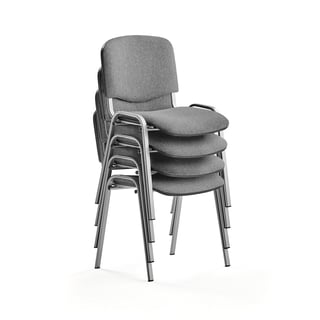
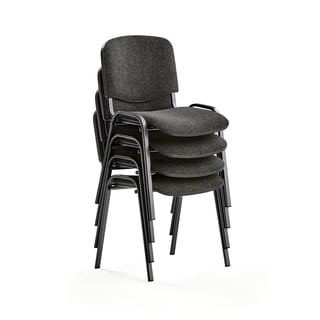
£129.00
(£32.25/each)Ex. VAT
£155.00
(£38.75/each)Ex. VAT
The six conference chair mistakes in summary
- Looks over comfort - comfort matters most when you need it most. Padded seats and armrests are worth the cost in long-session rooms.
- Chairs that can only do one job - If your room flexes between boardroom and training layouts, your chairs need to flex with it. Stackable and lightweight designs earn their keep.
- Not checking against the table - seat height, armrest clearance, and space per person need verifying. Measure once, order with confidence.
- Underestimating acoustics - fabric-upholstered chairs and quality floor glides reduce noise and echo. In hybrid or open-plan spaces, acoustic quality compounds every meeting held there.
- Forgetting between meetings - stacking efficiency, cleanability, and durability between sessions determine long-term cost and room turnover time. A chair that stacks poorly wastes time every single day.
- Mistaking lowest price for best value - budget chairs save money upfront but often cost more over five years when replacement cycles, maintenance, and downtime are factored in. The right chair for your room type delivers better total value.