- AJ Products UK
- Inspiration
- Ergonomics in the workplace
- The benefits of height adjustable desks
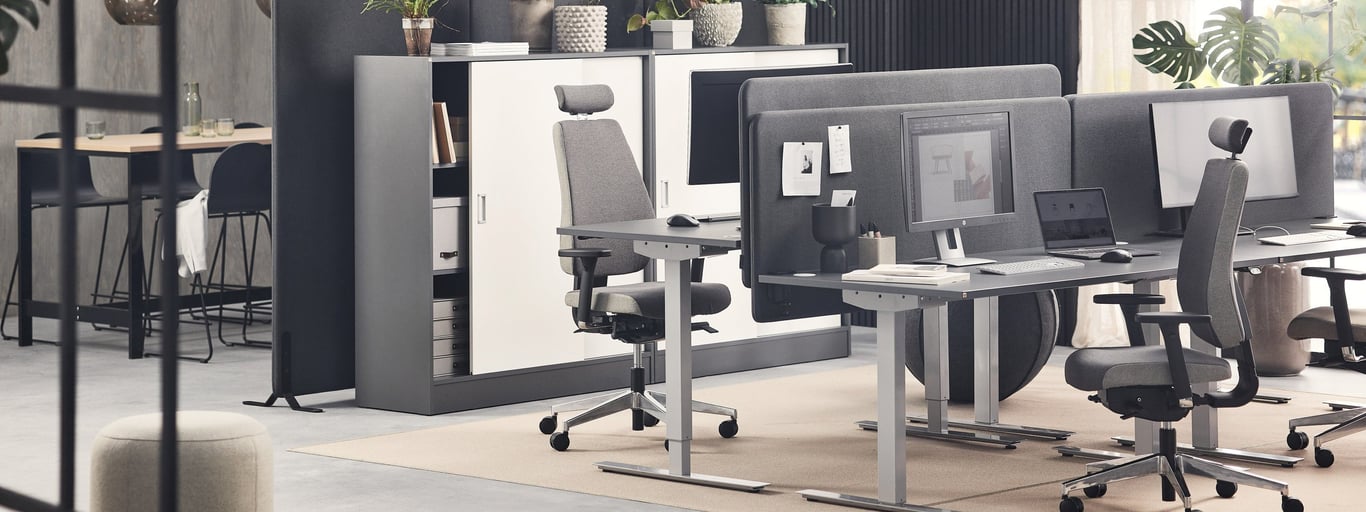
The benefits of using standing desks: Expert guide
Over time, this lack of movement places strain on the body and increases the risk of musculoskeletal pain. For desk-based workers, this adds up quickly; they spend around 70% of the workday sitting, often totalling 9–10 hours a day.
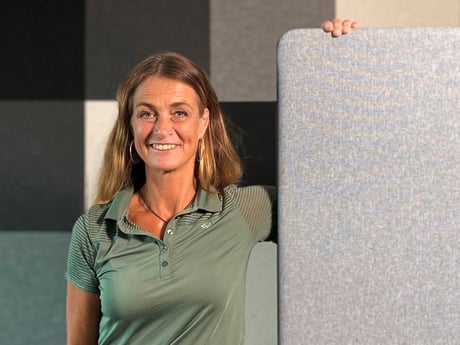
To explore this further, we spoke to ergonomist and physiotherapist Anna Millbourn Olander, who has over 30 years of experience at Avonova. She provides expert advice on reducing pain at work and supporting your body throughout the day.
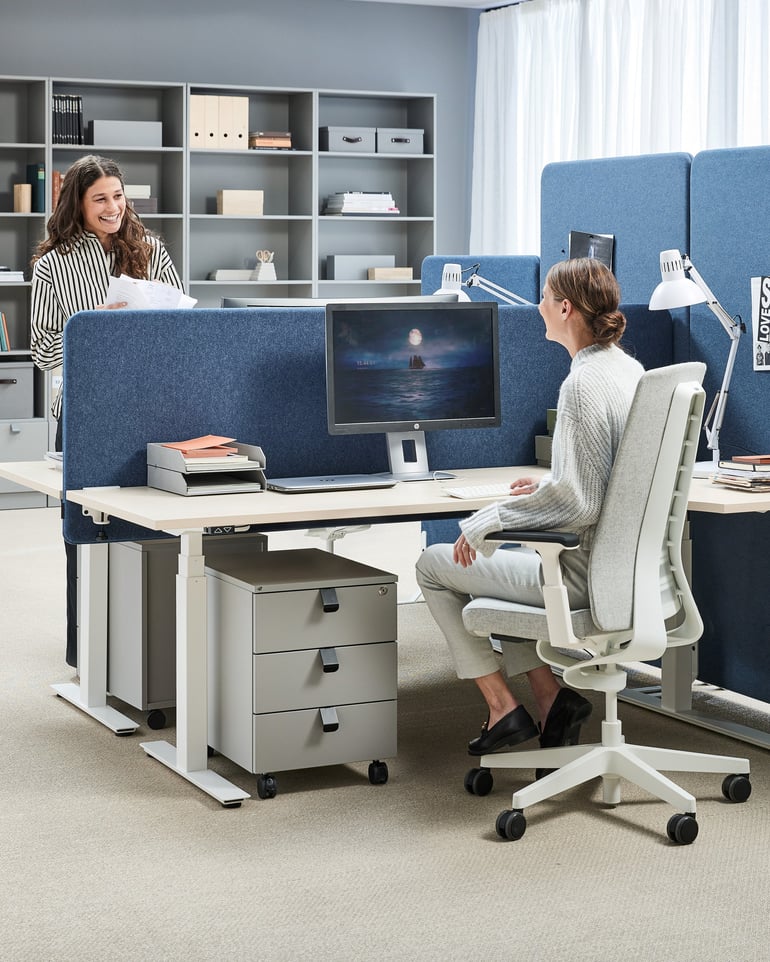
Are standing desks good for you? What science says
- A 2024 study found that reducing sitting time helped lower blood pressure, suggesting that using a standing desk and taking regular movement breaks may support better heart health.
- According to the NHS, prolonged sitting slows metabolism, making it harder for the body to regulate blood pressure and blood sugar, and to break down body fat.
- A 2025 review of studies on university students using standing desks found that reducing sitting time improved moods.
- An NHS-backed research revealed that those who stand more than an hour a day at work report higher job satisfaction and engagement.
What are the benefits of using office standing desks and is it better to stand or sit at work?
A recent study show that standing desks increase work productivity by 1.75 hours per week, and for every £1 a business spends, the ROI rises to £4.72. According to Anna Millbourn Olander, ergonomist and physiotherapist at Avonova, “Combining standing and sitting at work will have positive effects on most people's health.”
She explains that “the body uses around three times as much energy when standing as when sitting. Even a few hours of standing a day can help burn calories and reduce the risk of lifestyle diseases.”
Anna also emphasises the importance of regular movement: “Taking a walk on your lunch hour is recommended… At the same time it must be stressed that it is by no means forbidden to sit in the office, you have to vary your posture and sometimes it is even a good idea to sit down for a while to avoid putting too much pressure on the knees and feet.”
This helps workers avoid the disadvantages of standing desks, like fatigue from standing too long, while still enjoying the benefits.
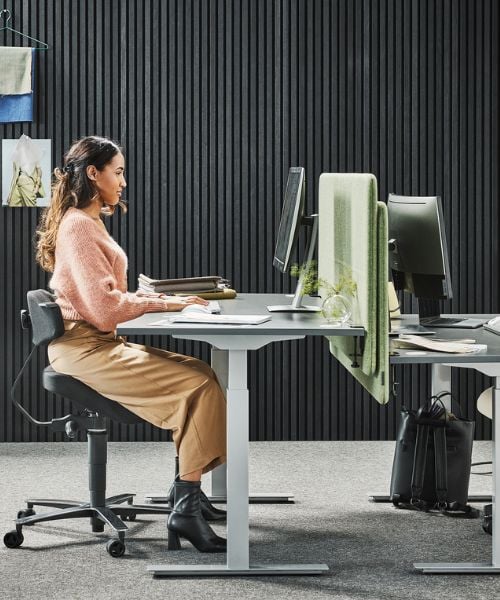
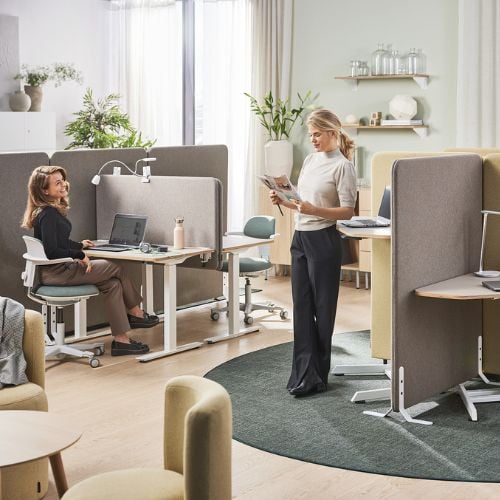
10 Health Benefits of Standing Desks
For people who spend most of their day at a desk, sedentary habits can increase the risk of chronic conditions such as diabetes, heart disease and obesity. That’s why the British Heart Foundation recommends at least 150 minutes of moderate physical activity each week to help counter these risks and break up extended sitting time.
Anna Millbourn Olander advises keeping your elbows at a 90-degree angle whether sitting or standing. Standing should ease pressure on your back, neck and legs, while sitting at intervals prevents unnecessary strain on your knees and feet. In other words, the real benefit comes from regularly varying your posture, not standing still all day.
- Standing uses more energy than sitting, supporting metabolism and encouraging small but meaningful increases in daily movement.
- Prolonged sitting is linked to higher risks of cardiovascular disease, type 2 diabetes, obesity and posture-related discomfort, while standing helps lower these risks.
- Alternating between sitting and standing promotes healthier posture and prevent long-term musculoskeletal disorders.
- Short movement breaks improve circulation, reduce stiffness and support long-term wellbeing.
- Standing burns slightly more calories than sitting — around 88 calories an hour compared to 80, according to Harvard Medical School.
- Light activity boosts this even further. For example, walking on a desk treadmill can raise calorie burn to around 210 calories per hour.
- Using an anti-fatigue mat reduces pressure on your feet and legs, making longer standing periods more comfortable and supportive. Read more about why you should get anti-fatigue matting for your desks.
- Breaking up sitting time improves focus and cognitive performance, helping people stay more alert during long workdays
- Using sit stand desks reduce lower-back discomfort. For best results, consider ergonomic accessories like footrests and monitor arms to avoid hunching or poor screen alignment.
- Standing more throughout the day can help lower blood sugar levels after meals, with studies showing reduced glucose spikes when sitting time is broken up with standing or light movement.
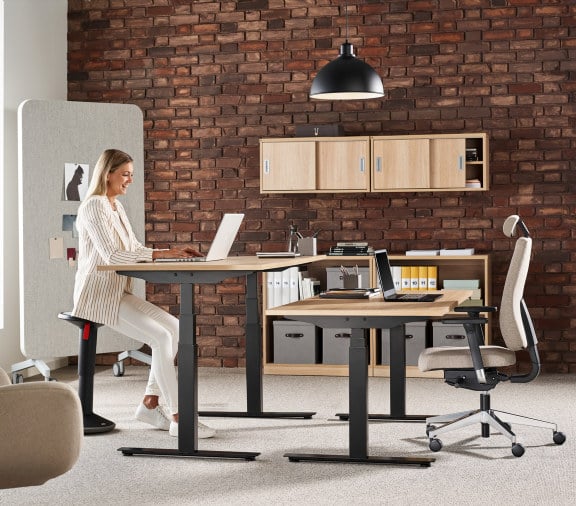
Benefits of Choosing Standing Desks from AJ Products UK
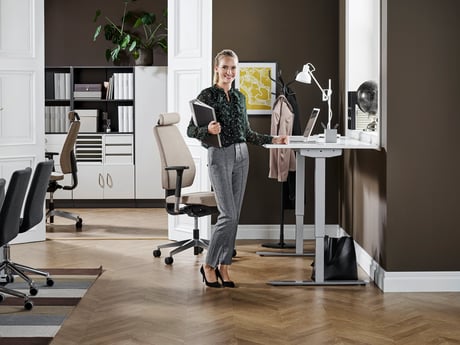
If you’re still wondering whether standing desks are worth it, browse our range at AJ Products UK to consider your options. Our selection includes a wide choice of sit-stand desks in both electric and manual designs, available in multiple sizes and shapes, including corner standing desks and larger height-adjustable workstations for conference rooms.
We supply businesses across the UK with electric height-adjustable desks, ergonomic chairs, active sitting, and a wide range of workplace furniture – all designed to support wellbeing and productivity. Explore our range online or get in touch for advice on creating a healthier working environment.
FAQ
- For individuals using a desk alone, there’s no strict requirement for it to be height-adjustable. However, in shared workspaces, regulations in some countries, such as Denmark, recommend adjustable desks to suit different users.Even where not legally required, providing sit-stand desks makes good business sense. Many organisations now include them as part of wider wellbeing initiatives, helping to reduce absenteeism linked to back pain and support better engagement at work. Offering flexibility allows employees to choose when to sit or stand, encouraging healthier habits without disruption.
- Correct desk height is key for comfort and ergonomics. Whether sitting or standing, your elbows should rest at roughly a 90-degree angle on the desk surface. Standing desks should relieve strain on your back, neck, and legs, while seated work should avoid overloading knees and feet.
It’s also important to vary posture regularly. Don’t sit for more than two hours continuously; take breaks to stretch, walk, or simply change position. You don't necessarily have to sit still on a classic office chair. Take a look at our selection for active sitting options - and keep your body moving while you are sitting. - Height-adjustable desks help reduce prolonged sitting, which is linked to back pain and fatigue. By allowing users to alternate between sitting and standing, they can support better posture, improve comfort and help maintain energy levels during the working day.
- There’s no fixed rule, but a common recommendation is to alternate every 30 to 60 minutes. The key is regular movement, short changes in posture can help reduce stiffness and improve overall comfort without disrupting your workflow.
- Yes, particularly in environments where employees spend long hours at their desks. They support wellbeing, can help reduce discomfort-related absences and show a clear commitment to employee health, something that’s becoming increasingly important in modern workplaces.