- AJ Products UK
- Inspiration
- Tips & trends
- What your office furniture says about your business

What your office furniture says about your business
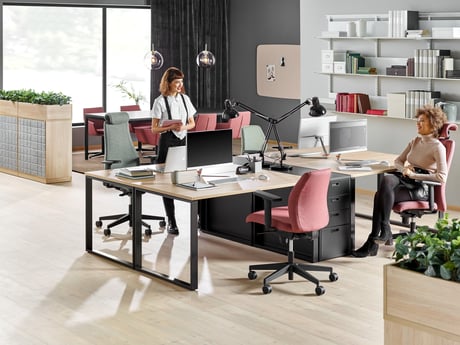
Your office is the physical representation of your business. The design and layout can have a big influence on the productivity and wellbeing of employees as well as making an impression on your clients. It demonstrates your company culture, your priorities and your spending power. The type of office furniture that is suitable will vary from business to business, but regardless, your workplace is worth any investment you can afford to make. Smart choices and innovative ideas will create a workplace of which you can be proud no matter your budget.
- Traditional: stability, expertise and authority. Suits solicitors, notaries and accountants.
- Active: a business that cares about its people and keeps moving forward.
- Creative and collaborative: openness and ideas. Suits agencies, tech companies and start-ups.
- Welcoming and hard-wearing: reliability and care. Suits healthcare, education and public services.
- Comfortable and quiet-friendly: a team that has been thought about. Suits customer service teams and call centres.
- Flexible: trust and choice. Suits hybrid teams and activity-based ways of working.
Traditional furniture for professional services
Imposing, dark wood office furniture creates a reassuring atmosphere for businesses offering professional services, such as solicitors, notaries and accountants. It should be coupled with brown or black leather office chairs and waiting room furniture. This traditional look implies stability and longevity: comforting qualities to convey to clients. While many workplaces are moving towards an open-plan set-up, individual offices are important in this type of business to provide privacy for clients and illustrate your expertise and authority.
Active office furniture for people-first workplaces
Companies that have embraced active working send a clear signal to employees and visitors alike that this is a business that cares about its staff. By demonstrating your commitment to employee wellbeing, you will improve job satisfaction and staff retention as well as attracting the best new recruits and reassuring potential clients that your business is at the cutting edge. This type of furniture suggests a company that is always on the move: a productive company that won’t rest on its laurels. Sit-stand furniture has even been shown to improve work performance and concentration.
Creative and collaborative office furniture
Hard-wearing furniture for healthcare, education and public services
Quiet-friendly furniture for customer service teams and call centres
Flexible and activity-based offices
Flexible working shows trust in your employees and puts an emphasis on creativity and independent thinking. As well as allowing staff to work from home and choose flexible hours, this approach can be reflected in your office furniture. In an activity-based office, employees choose their environment depending on their current task: standing up to work, sitting comfortably on a sofa, concentrating in quiet spaces or brainstorming in a purpose-built group working area. Providing choice will create a modern workplace that demonstrates the company’s ability to move with the times and change old ways of thinking if it will lead to improvement.
Flex office, hot desking and activity-based office: what's the difference?
| Hot desking | Flex office | Activity-based office | |
| Own desk | No, any free desk | No | No |
| Layout | Standard desks, often open plan | Largely identical workstations | Different zones for different tasks |
| Main aim | Use fewer desks well | Cut down on empty desks | Match the space to the task |
| Furniture to prioritise | Height-adjustable desks, easy-adjust chairs, lockers | As hot desking | Lounge seating, hight tables, screens, sound absorbers, varied meeting rooms |
Which one suits your business?
Hot desking or a flex office tends to suit teams who split their time between home and the office and want to use fewer desks well. An activity-based office suits teams who do very different kinds of work through the day, but it needs enough quiet zones to work properly. Without them, it can feel stressful rather than creative. Our guide to creating an activity-based office explains how to set the zones up.
Furniture to look for
Because several people will adjust the same chair or desk in a day, choose pieces that are quick to adjust and built to last. Height-adjustable desks let each person set up in seconds, ergonomic office chairs with simple controls suit every body, and lockers or mobile storage give people somewhere to keep their things between visits.
Choosing a style that suits your budget
You don’t need to refurnish the whole office to change the message it sends. Start with the pieces people use all day, such as chairs and desks, and build from there. Think about how your team works before you think about how the room looks. Our guide on how to decide what office furniture you need is a good place to begin. When you’re ready, you can request an online quote or visit our Farnborough showroom and see the furniture in person.
Don’t underestimate the impact the physical workplace can have on how people view your company. The office furniture you choose can change the atmosphere of your business and make the difference between a company considered to be at the forefront of its industry and one that gets left behind.
FAQ
- It shows your company culture, your priorities and how much thought you’ve given to the people who use the space. Traditional furniture suggests stability and authority, active furniture suggests a business that cares about its people, and flexible or collaborative layouts suggest openness and trust.
- Hot desking is about how desks are shared: nobody has their own desk, and people use any free one. An activity-based office is a whole-office design with zones for different tasks, and people choose where to work depending on what they’re doing. Hot desking can be part of an activity-based office.
- They overlap, because both mean no assigned desks. Hot desking usually describes how people use the desks, while a flex office describes the layout: largely identical workstations and no activity zones.
- No. Flexible working is about hours and location, and employees in the UK have a legal right to request it. A flexible office is about furniture and layout.
- Height-adjustable desks, chairs that adjust quickly and easily, and lockers or mobile storage so people have somewhere to keep their things.