- AJ Products UK
- Blog: Tips to Inspire Happiness at work
- Style concepts
- Workplace style concepts
- Changing rooms designed with everyone in mind
Workplace changing room layout: five style concepts (and when each works best)
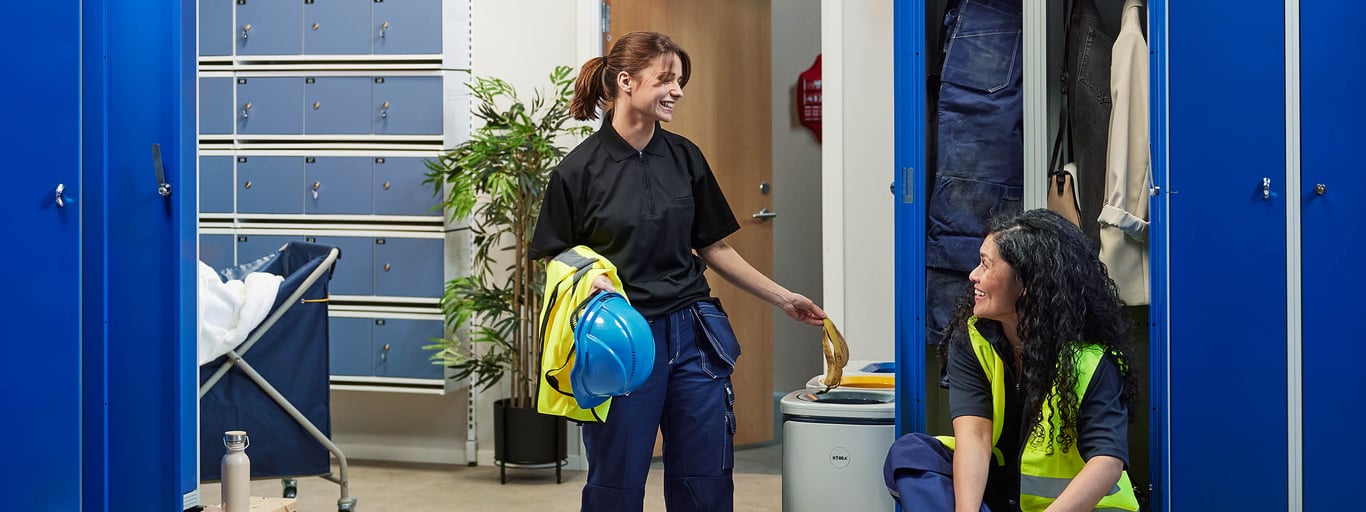
Changing rooms get used every day and designed almost never. When the layout works, nobody mentions it. When it doesn't, complaints start within a week of fit-out: queues at handover, kit on the floor, lockers in the wrong size. Below are five workplace changing room concepts we've put together for different kinds of business, plus the layout principles and floor plan tips behind them.
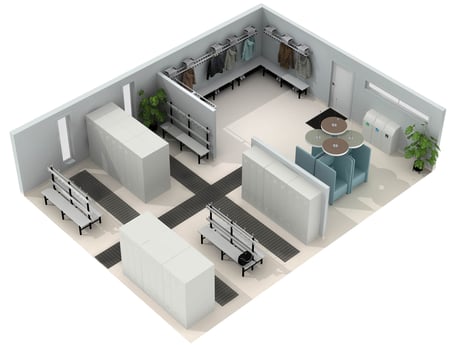
Neutral & structured
Grey tones and earthy accents create a clean, functional changing room that holds its own across mixed teams and shift patterns. A good fit for workplaces where the priority is order and simplicity rather than statement design.Get Inspired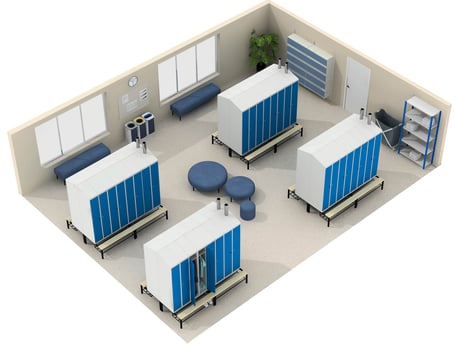
Calm & consistent
Soft blues, smart storage solutions and a clear clean/dirty separation. Ideal for hygiene-sensitive workplaces in food production, healthcare and similar settings where the layout has to do the heavy lifting on contamination control.Get Inspired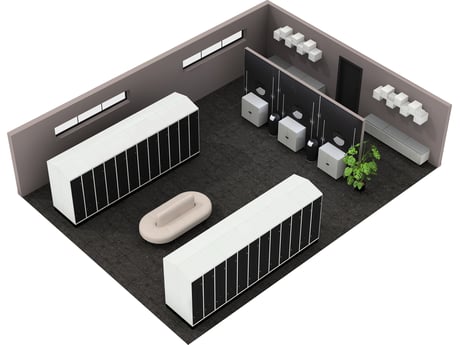
Safe & secure
Dark and light tones combine with secure storage and carefully chosen finishes to create a room that feels closer to a domestic space than a utility one. Suits workplaces where staff value privacy and the changing room doubles as a brief decompression point between shifts. Get Inspired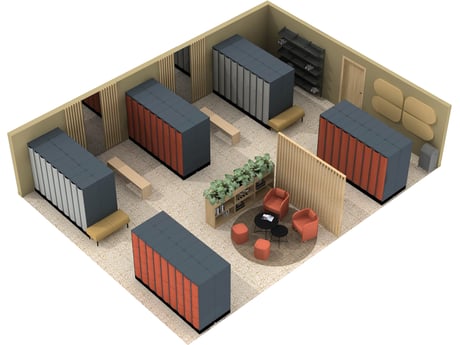
Warm & Vibrant
Natural wood finishes and bright accents soften an otherwise functional room and make it feel more like an actual destination. Works well in workplaces where the changing room overlaps with break time or where staff naturally end up chatting before and after shifts. Get Inspired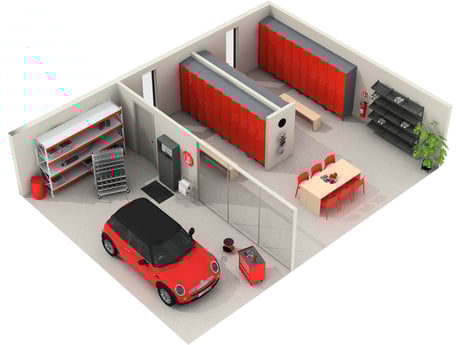
Invigorating & energetic
Award-winning design and bold red tones give the room a distinctive identity. Best suited to sports clubs, gyms, leisure centres and teams that want the changing room to feel like part of the brand rather than a back-of-house afterthought. Get InspiredWe are here to help!
Our interior experts are ready to guide you through every step, from choosing the right materials and storage solutions to planning colour schemes and layout. Whether you’re upgrading an existing changing room or building one from scratch, we’ll help you create a functional, safe and welcoming space where every employee feels comfortable. Get in touch, and together we’ll find the best solution for your needs.

Changing room layout principles that apply to every design
These apply regardless of which concept you start from. Decide on these before the furniture order goes in:- Clean/dirty separation - outdoor footwear and coats near the entrance, clothes lockers for workwear in the middle, showers and the route to the workspace at the far end. In food production, healthcare and similar sectors the separation has to be physical (a wall or door between zones), not just a marked line on the floor.
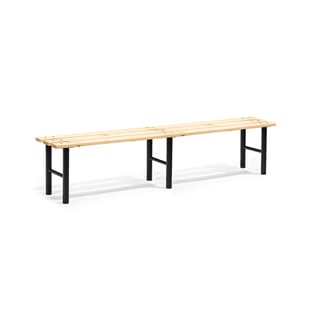
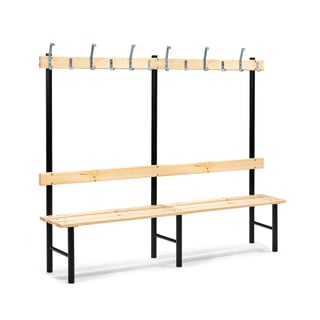
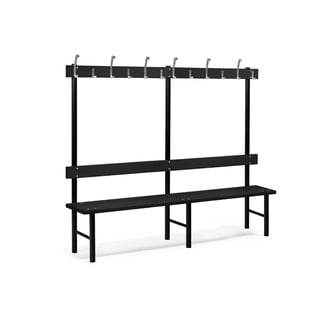
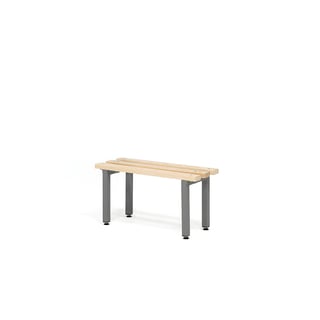
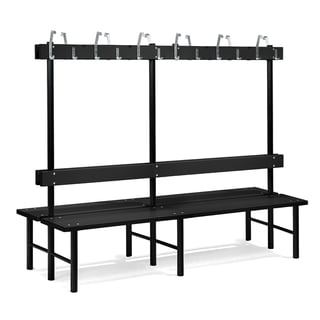
- Seating that works for the room - Sport England’s design guidance recommends 500–600mm of bench length per user and a bench depth of 400–450mm so taller staff aren't perching on the edge. Corners and bench ends against a wall don't count as usable seats; two places are lost wherever benches meet at right angles. Where floor area is tight, combination units that integrate lockers with bench seating save space without losing capacity.
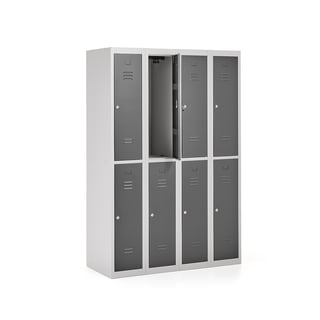
- Locker sizing - a warehouse worker's locker needs different things to a graphic designer's. Industrial users want taller, deeper lockers with ventilation. Office staff often need only a personal effects locker for a bag and a coat. Plan around what people bring with them.

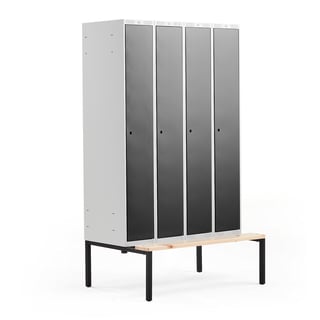
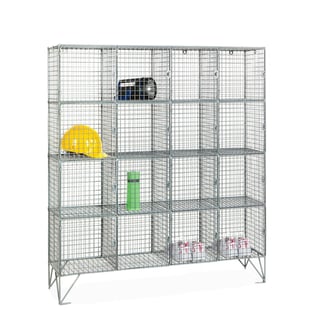
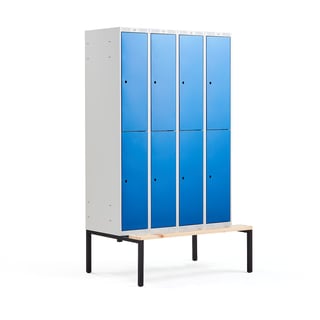
- Accessibility built in, not retrofitted - Part M of the Building Regulations and BS 8300 set the UK standard for accessible changing provision. A wheelchair-accessible space needs around 1,500mm x 2,200mm of clear floor area, an accessible locker at reachable height, grab rails and a fold-down bench. Built into the layout from the start, it costs nothing extra. Retrofitted later, it usually means knocking out furniture and partitions.
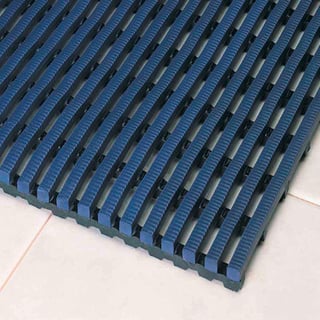
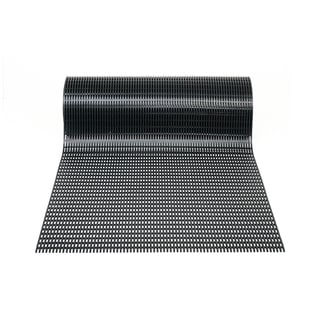
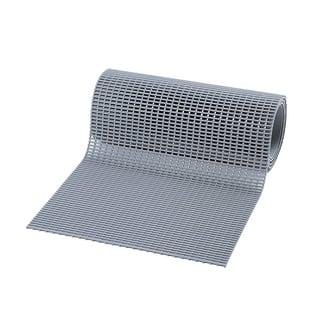
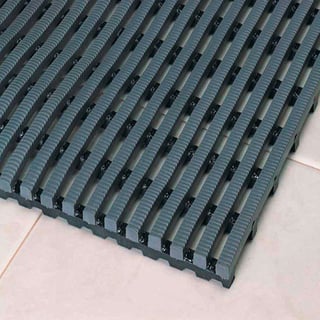
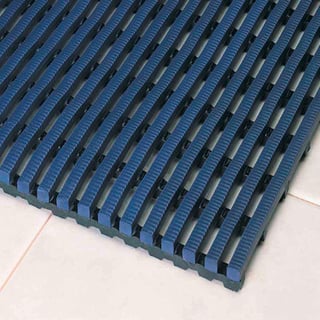
- Cleaning, laundry and safety - hygiene tends to be the planning afterthought, which is the wrong way round. Wall-mounted benches keep floors easier to mop. Wet area mats reduce slips around showers. Laundry handling units stop dirty workwear ending up on the floor. A first aid kit is far simpler to mount on the wall before the lockers go in than afterwards.
How to plan a changing room floor plan
Walk the existing room at peak handover. Write down what isn't working: bags on the floor, queues at the lockers, a bench nobody uses. Those notes are your starting point.- Establish peak occupancy. Not total headcount. The number you want is the largest group changing at the same time, usually at shift handover. If 60 people work across three shifts but only 25 overlap, your peak is 25.
- Calculate changing room space per person. As a baseline, allow about 1.8 m² per user for a dry changing room (offices, schools, industrial settings). Wet rooms attached to a pool, gym or shower block need 2.5-4 m² because cubicles and slip-resistant matting take more floor area. Multiply by your peak number to get a total.
- Block out zones on paper. Entrance and outdoor footwear at one end, lockers in the middle, showers and the exit to the workspace at the other. The route from dirty to clean should run in one direction. Allow 1,500mm between back-to-back locker rows.
- Drop in real furniture dimensions. A standard 2-door locker is around 1,800mm tall, 600mm wide and 500mm deep. A 1,500mm bench seats two or three people comfortably. If everything doesn't fit at peak occupancy, the options are fewer people, smaller locker types, or more room. Usually only the first two are realistic.
- Plan for cleaning, laundry and safety last. Easy to leave out at first, expensive to fix afterwards.
For more detail on furnishing once the floor plan is sketched, see our 7 tips for a winning changing room.
- Allow around 1.8 m² per user for a dry changing room in an office, school or industrial setting. The figure covers lockers, benches and circulation. Wet changing rooms attached to a pool, gym or shower block need 2.5-4 m² per user because of the added space for cubicles and slip-resistant matting.
- Allow 1,500mm between back-to-back locker rows so two people can pass while doors are open. In front of a single bank of lockers, 1,000mm is the working minimum. Main walkways should sit at 1,500mm wherever possible. Anything below 800mm causes congestion, especially when bags and kit end up on the floor.
- Around 500-600mm of seating width per user, with a bench depth of 400-450mm. Corners and bench ends pressed against walls don't count as usable seats, because two places are lost wherever benches meet at right angles. For a team of 12 needing to sit at the same time, plan for roughly 7 metres of effective bench length.
- A standard full-length workwear locker is around 1,800mm tall, 300–400mm wide and 500mm deep. Smaller personal effects lockers for valuables are typically 150–300mm wide and can be stacked. In wet areas, raise lockers on a 150mm plinth to protect against corrosion. See our lockers range for full-length options.
- Slip-resistant vinyl or rubber matting works well in wet areas, with hard-wearing flooring elsewhere. Our wet area mats cover the most common workplace layouts.
Get the latest product launches and offers sent direct to your inbox
Do you want to receive exclusive offers, information about new products and inspiration on how you can improve your workplace? Sign up for our free newsletter and be the first to receive our best offers.*By clicking subscribe, I confirm that I have read the privacy policy.