- AJ Products UK
- Inspiration
- Improving the work environment
- How your office can improve employee engagement
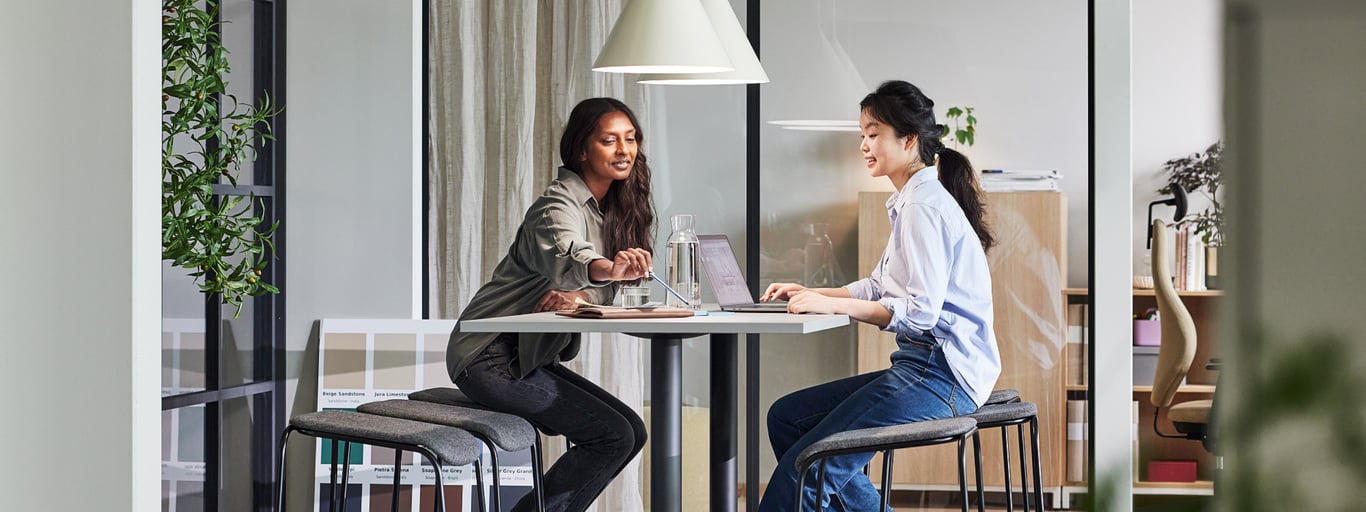
How workplace design improves employee engagement
That might sound bold but the evidence is hard to ignore. Research from Steelcase found a clear link between high levels of engagement and high levels of satisfaction with the work environment. And research carried out by the Chartered Management Institute (CMI), in partnership with YouGov, found that a third of workers have admitted they have even considered moving jobs due to the negative impact of their work environment on their health.
The physical workspace isn't a passive backdrop. It's an active force, for better or worse, on the people inside it.
The good news? You have more control over that than you might think. The right design choices can turn your office into a genuine driver of engagement, wellbeing and performance. Here's where to start.
1. Why the workplace has a direct impact on engagement
Engagement is often treated as a culture problem, something to solve with better management, clearer values or more frequent check-ins. And while those things matter, they miss something fundamental: people can't engage well in an environment that works against them.
Think about what a poorly designed office actually feels like to work in. Too noisy to concentrate. No space to have a private conversation. Nowhere comfortable to take a proper break. Furniture that leaves you stiff and tired by mid-afternoon. These aren't minor inconveniences, they're daily friction that chips away at how people feel about their work and their employer.
The reverse is equally true. When the environment gives people choice, comfort, movement and the right kind of space for the task at hand, engagement tends to follow. Not because the office is impressive, but because it shows that the organisation has thought about what its people actually need.
That's the shift worth making: from an office that people tolerate to one that actively supports them.
2. Flexible spaces that support different ways of working
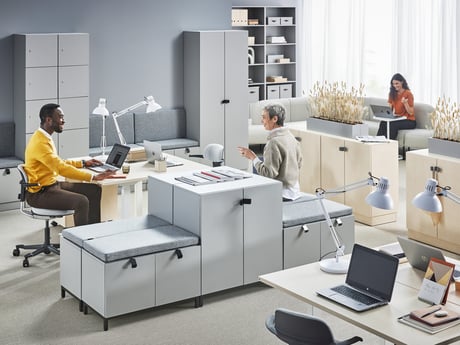
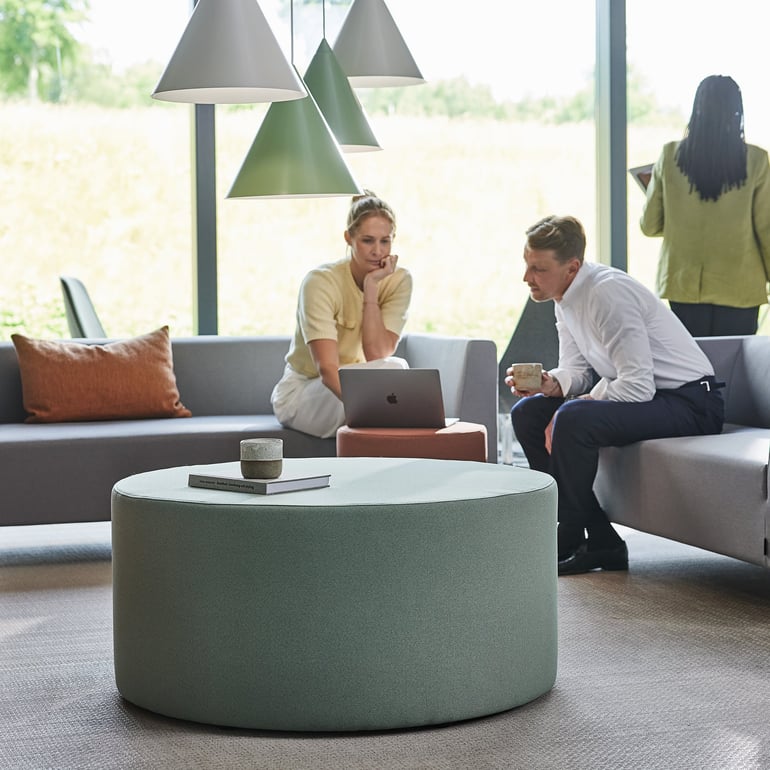
One of the most common frustrations in modern offices is a lack of choice. According to Steelcase, 40% of workers say they don't have enough informal spaces in their workplace. When every task has to happen at the same fixed desk, in the same posture, with the same level of noise around you, the environment stops working for you and starts working against you.
An activity-based approach flips that. Instead of one assigned spot, people choose their environment based on what they're doing. Deep focus work in a quiet zone. Collaborative thinking in an open, dynamic space. A relaxed couch for reading or informal catch-ups. A standing area for short bursts of energy.
This isn't just about variety for its own sake. It's about acknowledging that different people work differently and that the same person needs different environments at different times of the day. When your office can adapt to that, creativity, productivity and satisfaction all tend to rise together.
If you're reviewing your current layout, start by asking one simple question: does this space give people genuine options or just the illusion of them?
3. Social areas that people actually want to use
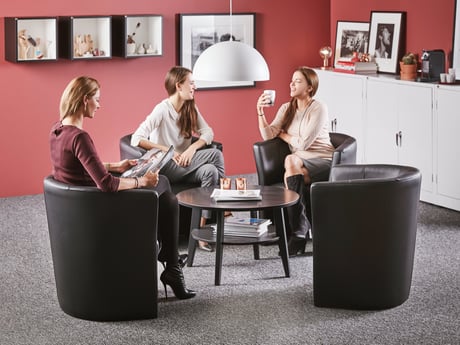
A breakout area that nobody uses isn't a wellbeing initiative, it's a missed opportunity. The difference between a social space people gravitate towards and one they avoid usually comes down to how considered it feels. A few chairs pushed into a corner doesn't send the message that rest and connection are valued. A properly designed canteen or breakout space does.
When people have a dedicated, welcoming place to step away from their desks (somewhere that genuinely feels separate from work) they're more likely to take breaks, and to benefit from them. Research consistently shows that productivity increases when people do. Stepping away from a screen, having an unplanned conversation with a colleague from a different team, sharing a coffee without an agenda... these moments build the relationships and the energy that formal collaboration rarely can.
Think about offering a few different social environments rather than one catch-all space. A canteen for eating and socialising. A quieter corner for reading or decompressing. Perhaps a more playful space for informal team interaction. The more the space reflects the range of your team's needs, the more it will actually get used and the more value it will return.
4. Supporting movement and wellbeing at work
Most of us know that sitting all day isn't good for us. Fewer of us do much about it, often because the office doesn't make it easy.
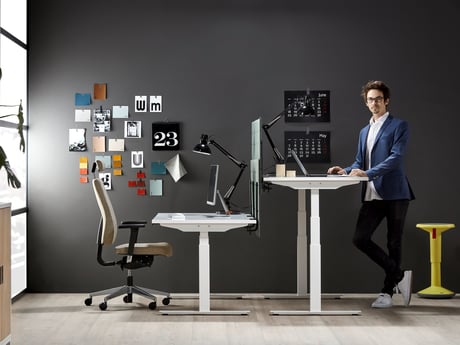
Active office furniture changes that by building movement into the working day without requiring people to step away from their tasks. Sit-stand desks let people shift between positions throughout the day, reducing the physical strain that comes from long periods of stillness. Active seating (saddle chairs, balance stools, dynamic chairs) keeps the body subtly engaged even when seated. Under-desk treadmills take it a step further, allowing gentle movement while working.
The benefits go well beyond the physical. Standing and movement have been linked to improved mood, sharper focus and higher levels of creativity. When people feel physically better, they tend to perform better too and to feel more positively about the environment they're working in.
For facility and operations managers, the business case is straightforward: investment in active furniture reduces the risk of musculoskeletal problems, supports long-term employee health and contributes to a workplace culture where wellbeing is taken seriously and is not just talked about.
5. Reducing stress throught better acoustics
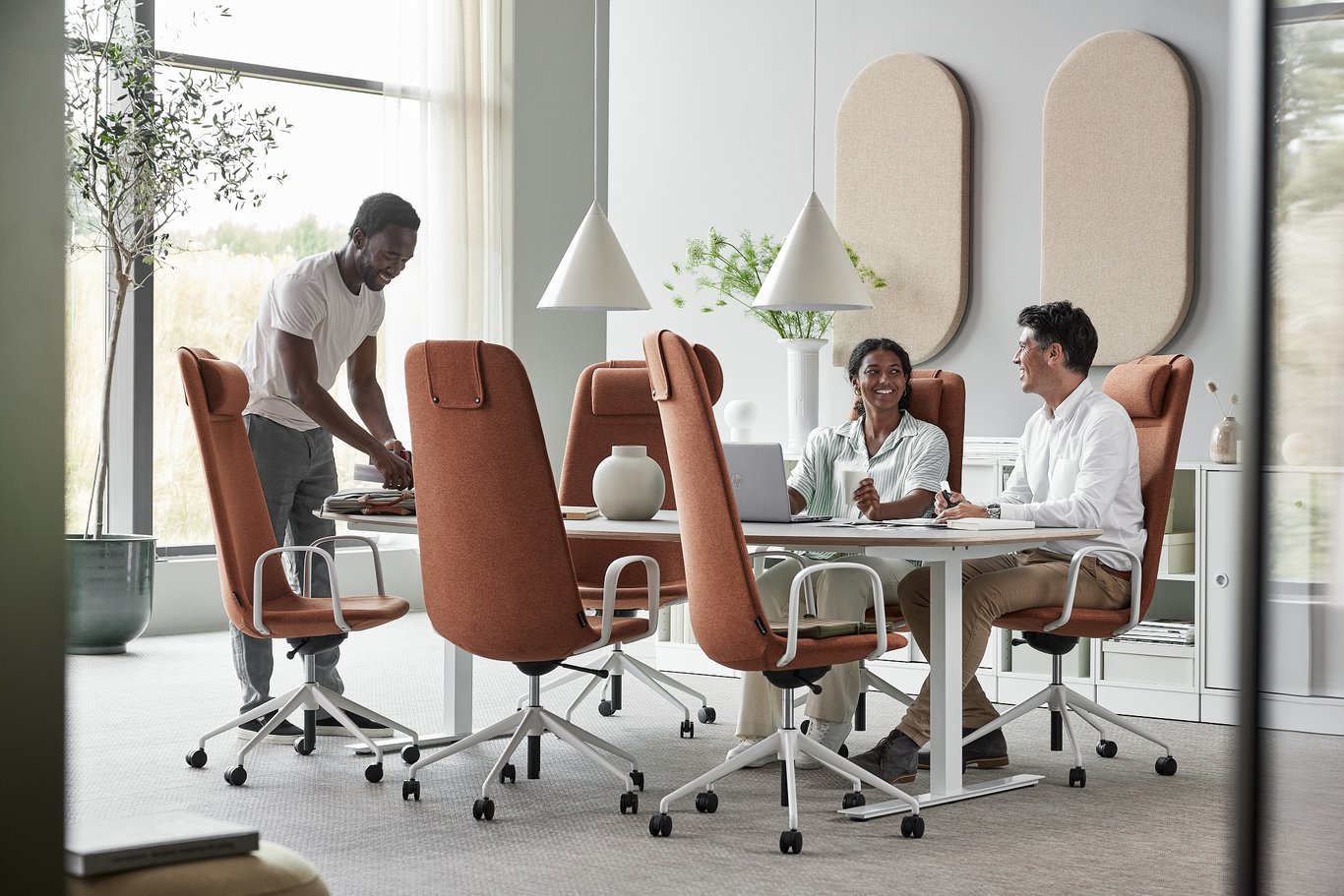
Noise is one of the fastest ways to undermine everything else you're trying to achieve with your workspace. Sustained exposure to unpredictable noise raises stress levels, reduces concentration and makes people feel like they have no control over their environment, which is one of the most disengaging feelings a workplace can create.
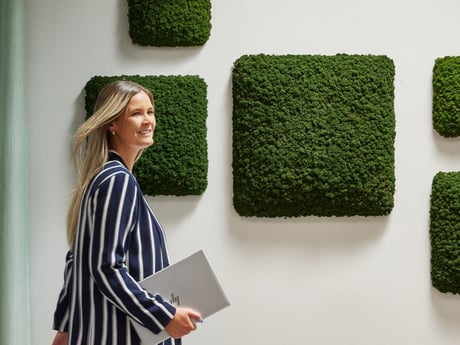
Acoustic desk screens, wall panels, ceiling-hung baffles and soft furnishings all make a meaningful difference to the soundscape of an open space. Combined with a zoned layout that separates noisier collaborative areas from quieter focus zones, the result is an office where people can actually hear themselves think.
For a deeper look at acoustic solutions and how to tackle noise in open-plan environments, take a look at our guide on how to improve productivity in open-plan offices.
6. The role of workplace culture
Think of design and culture as two sides of the same coin. One without the other leaves something important unfinished.
FAQ
- When the physical environment supports how people actually work; giving them choice, comfort, privacy and the right spaces for different tasks, it reduces daily friction and increases the sense that the organisation values its people. That directly influences engagement, morale and retention.
- Flexible and activity-based layouts, quality acoustic solutions, access to natural light, social and breakout spaces, and active furniture such as sit-stand desks all have a measurable impact on employee wellbeing in the workplace.
- Start with an honest audit of how your current space is actually being used and where the friction points are. Acoustics, lack of quiet space and absence of genuine social areas are the most common pain points. From there, small, targeted changes can make a significant difference without requiring a full redesign.