- AJ Products UK
- Inspiration
- Style concepts
- Workplace style concepts
- Canteen Style Concepts
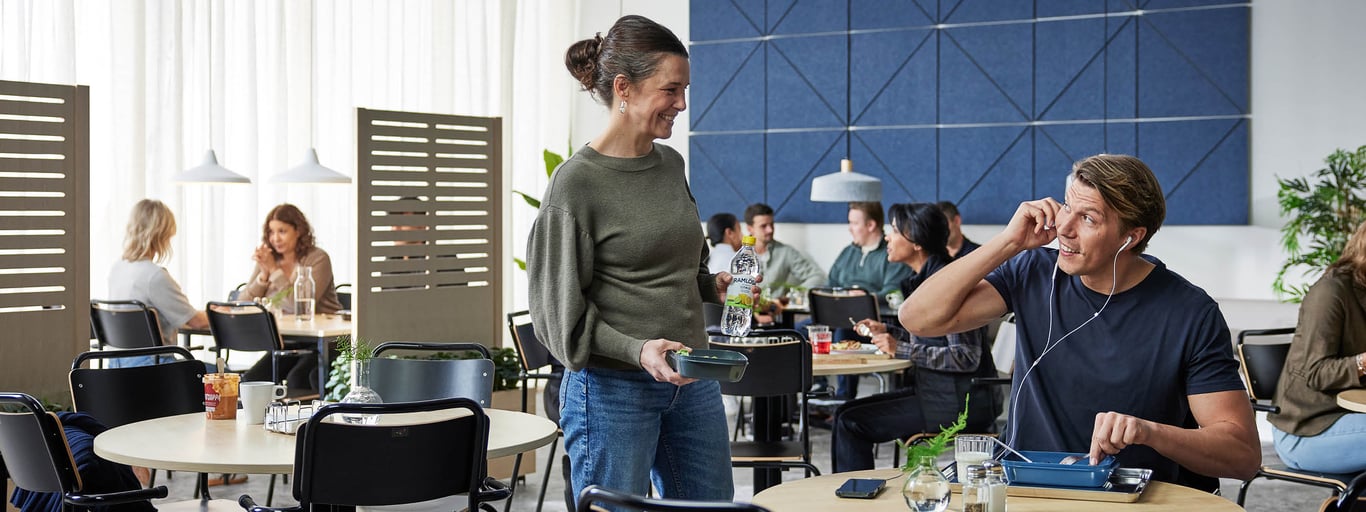
Popular canteen style concepts and layouts (and when they work best)
Few rooms in a workplace have as much quiet influence as the canteen. It's where the working day either gets a proper reset or doesn't, and most people can tell the difference the moment they walk through the door. That’s why we’ve put together six canteen concepts, each built around a different priority. With hard-wearing furniture, clever layouts, and a focus on comfort and functionality, we aim to create areas where people actually look forward to their breaks and head back to work feeling refreshed.
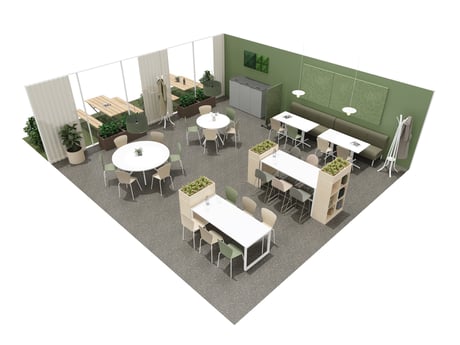
Quiet & natural – calm, focused recovery
A canteen style built for recovery: soft greens and natural materials to help busy teams switch off and recharge - perfect for workplaces where mental fatigue is a real factor.Get Inspired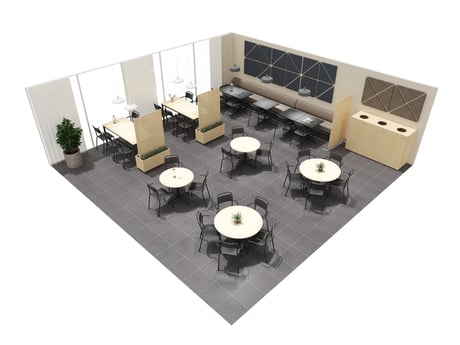
Durable & practical – clean & functional
Easy-to-clean surfaces and materials built to last create a canteen that can withstand dirt, wear and tear and the stresses of everyday life - ideal for busy environments.Get Inspired
Peaceful & calm - quiet by design
With sound-absorbing materials and smart zoning, this setup creates a calm space where people can enjoy their break without the buzz.Get Inspired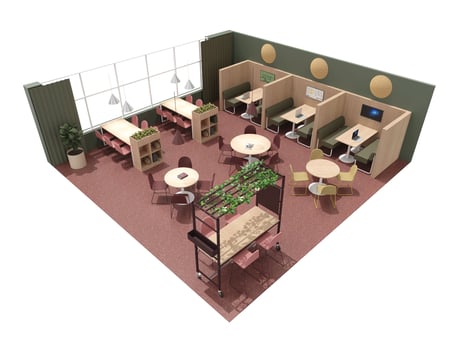
Lively & social - canteen as community hub
Bright colours, playful shapes and flexible layouts come together to create a vibrant space for teamwork and community. Booth seating and a mix of table sizes make it easy for people to join in.Get Inspired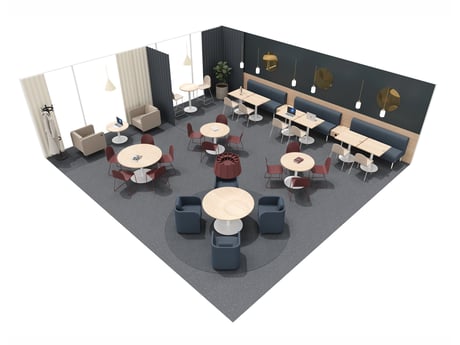
Cosy & relaxed
With lounge-style seating and soft tones, this canteen style offers a relaxing change of scene. Ideal for businesses with flexible break times and workplaces with strong wellbeing cultures.Get Inspired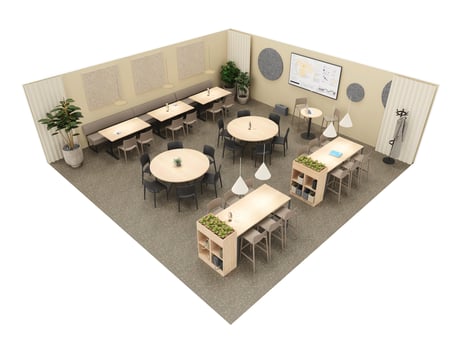
Adaptable & inviting – one room, many functions
Clever furniture makes it easy to adapt your space for more than just lunch. This canteen design concept is a perfect fit for multi-use rooms, regular events, and compact floor plans.Get InspiredGet help from our experts!
Our interior experts are ready to guide you through every step, from choosing materials and storage solutions to colour schemes and layout. Whether you want to update an existing lunch room or create a completely new one, we will help you create a pleasant, functional and well-thought-out environment where it is easy to feel comfortable. Get in touch and together we’ll find the best solution for your needs.
No project is too big or small.

Why canteen design actually matters
Canteen layout principles that underpin every concept
Whatever canteen style you choose, certain layout principles hold across all of them. They're worth keeping in mind before you start ordering furniture.
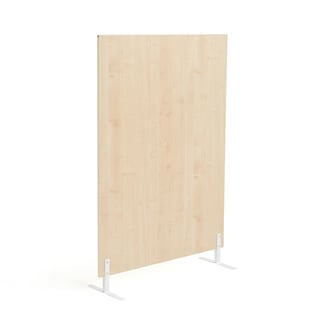
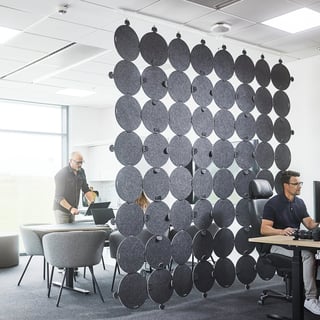
- Zoning – even in a small canteen, a degree of zoning (quieter corner, social centre, serving area) dramatically improves how the space feels to use. Floor screens and room dividers are one of the simplest ways to create that separation without a full refit.
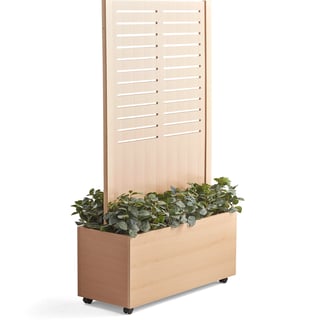
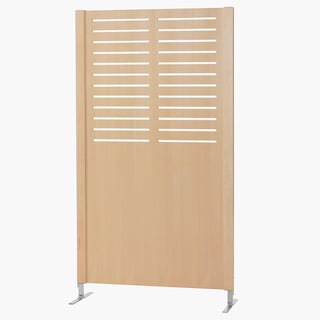
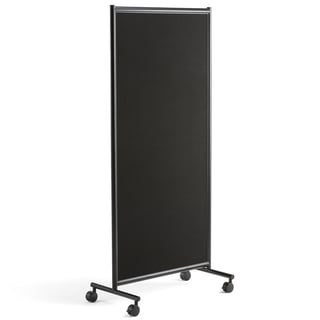
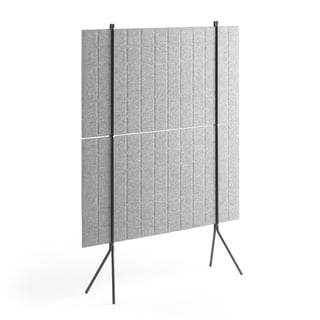
- Traffic flow - think about how people enter, queue, find a seat, and exit. A canteen that funnels everyone through a bottleneck creates stress before anyone's even sat down. Wide aisles (minimum 1,200mm between seated positions and walkways) keep things moving.
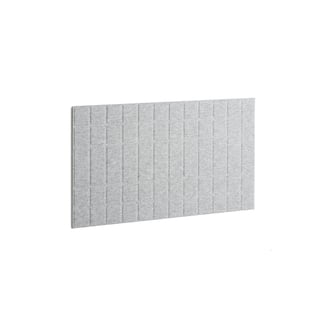
- Acoustic treatment - even the most social canteen concept benefits from acoustic panels or sound-absorbing surfaces. The difference between a space that buzzes and one that overwhelms is often just a few strategically placed panels.
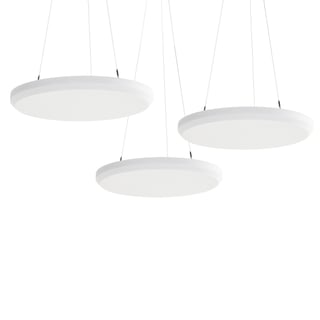
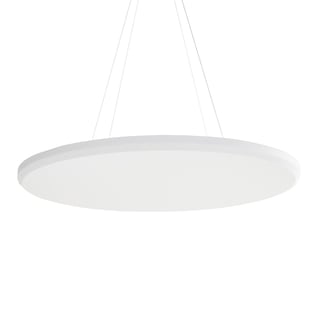
- Natural light - if you have windows, design around them. Orient seating to make the most of daylight. Where natural light is limited, invest in quality warm-white lighting, it makes an enormous difference to how a space feels.
- Furniture should do more than one job - every square foot counts. Seating with integrated storage, canteen tables that fold away, stackable cafeteria chairs and benches that clear the floor for events - these choices add value without adding clutter. Browse our full canteen furniture range for options that work hard.
How to choose the right canteen design concept for your workplace
A useful starting point: ask your staff. A quick survey about what they find most frustrating about the current canteen - noise, lack of seating, uninviting atmosphere - will give you a clear steer on which concept to lean towards.
Then consider footfall. We always suggest asking:
- How many people use the space at peak times?
- Do teams eat together or in shifts?
- Are breaks short and quick, or longer and social?
High-volume canteens need robust materials, easy cleaning protocols, and efficient layouts. Lower-footfall spaces have more freedom to prioritise atmosphere and comfort.
Budget is, inevitably, a factor. The good news: the most impactful canteen design changes are rarely the most expensive. Repainting walls, swapping lighting, adding acoustic panels, and replacing outdated furniture can transform a space for far less than a full refurbishment. At AJ Products we're happy to help you prioritise if budget's a constraint, just get in touch with our team.
- Large-workforce canteens need clearly defined zones - quiet, social, servery - multiple entry and exit points to manage flow, and robust acoustic treatment to prevent the space becoming overwhelmingly noisy at peak times. A mix of seating configurations, from individual spots to larger group tables, ensures the space works across different types of break.
- Noise in a workplace cafeteria can be reduced through a combination of acoustic panels, upholstered surfaces, high-backed booth seating, soft flooring and thoughtful zoning. The goal isn't to silence the room, it's to prevent noise from becoming draining at peak times.
- A multi-use canteen relies on furniture that folds, stacks and reconfigures quickly folding tables and stacking chairs paired with dedicated storage trolleys allow the room to shift from dining space to training room or event venue in minutes. The room should also have a clear reset plan so staff can reconfigure it reliably without confusion.
- A general planning guideline is to allow approximately 1.5 to 2 square metres per seated person in a canteen, with a minimum aisle width of 1,200mm between seated positions and walkways. The total seating capacity should typically accommodate around one third of the workforce at any one time, assuming staggered breaks.
Get the latest product launches and offers sent direct to your inbox
Do you want to receive exclusive offers, information about new products and inspiration on how you can improve your workplace? Sign up for our free newsletter and be the first to receive our best offers.*By clicking subscribe, I confirm that I have read the privacy policy.