- AJ Products UK
- Blog: Tips to Inspire Happiness at work
- Tips & trends
- How to keep your office desk clean and tidy
How to keep your office desk clean and tidy
Here's a straightforward guide to help your team keep their desks (and by extension, your office) in good shape.
Why a tidy desk matters more than you think
Desk accessories that do the hard work
The easiest way to keep a desk tidy is to give everything a proper home. If items have a designated place, they tend to stay there.
These desk accessory ideas will make a bigger difference than you'd expect:
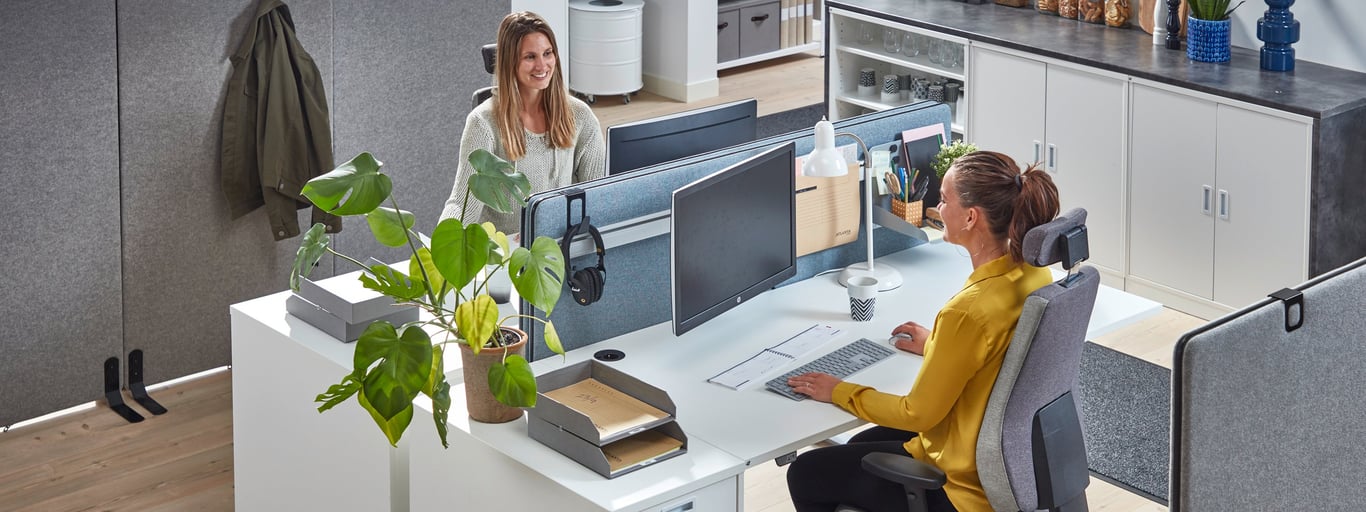
Monitor arms free up the entire desk surface by lifting the screen off it. And, as a bonus, they make it far easier to set the screen at the right ergonomic height, reducing neck and eye strain over the course of a long day.
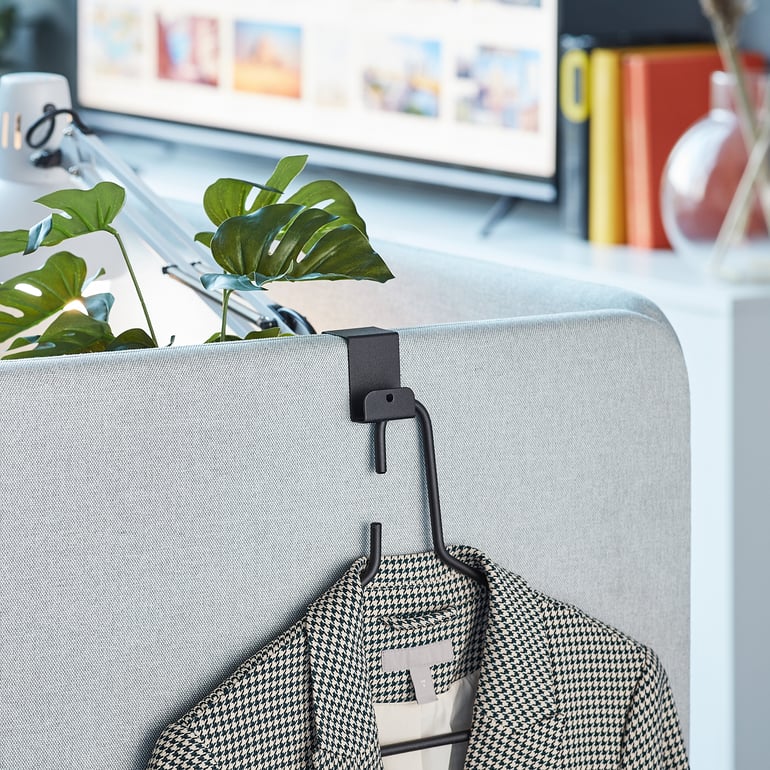
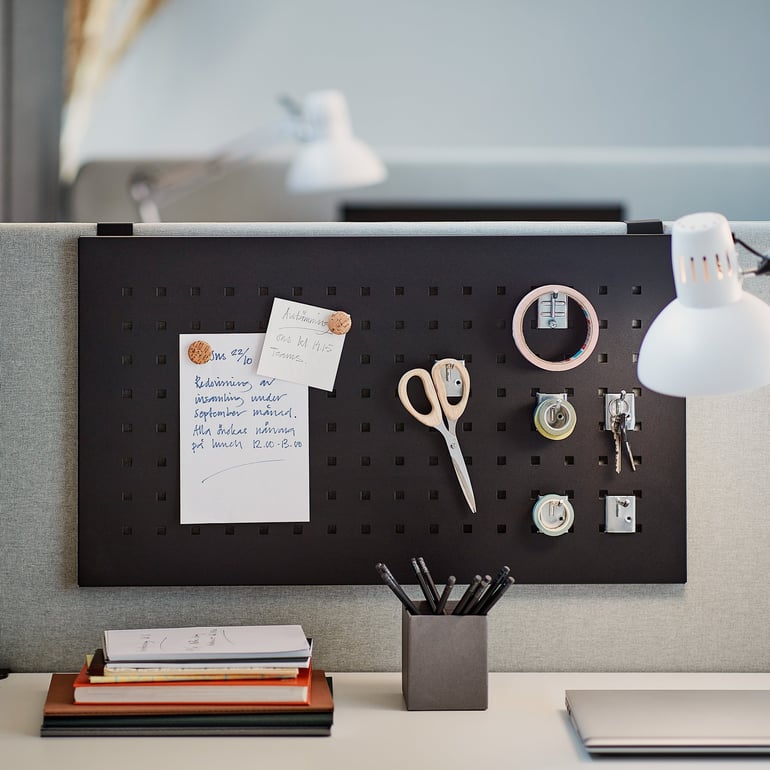
Desk screen hooks are a simple but clever solution. Rather than leaving headphones, bags or cables on the desk, a hook lets you hang them off the screen itself, keeping them within reach but completely off the workspace.
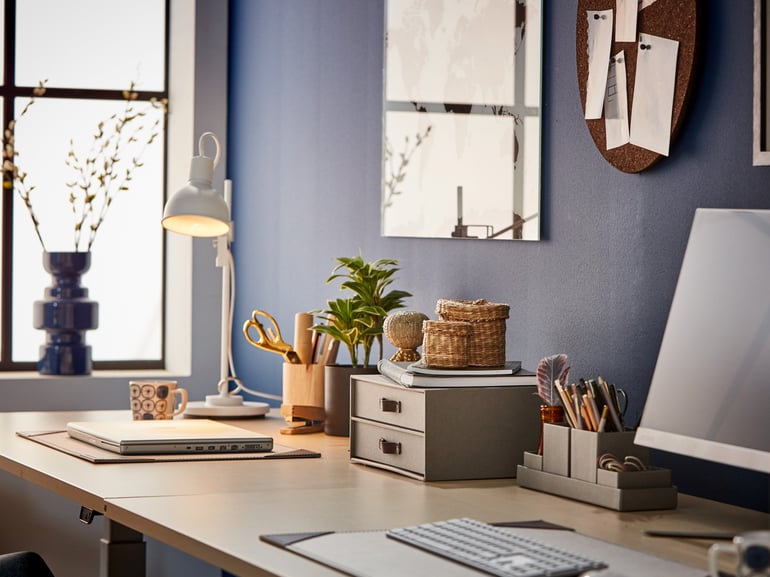
Pen holders, cable holders and sorting trays sound basic, but they do the quiet work of keeping surfaces clear. When everything has a place, tidying up takes seconds.
Get your paperwork under control
Paper is one of the biggest sources of desk clutter in most offices and one of the easiest to manage with a simple system. A desktop sorting tray with clearly labelled sections (to do, in progress, to file) means documents don't pile up randomly. Everything has a status and a place.
For facilities and HR teams, there's an important compliance dimension here too. Sensitive documents (anything containing personal data) should be locked away at the end of each working day. It's straightforward GDPR good practice, and it also removes a significant source of clutter in one step.
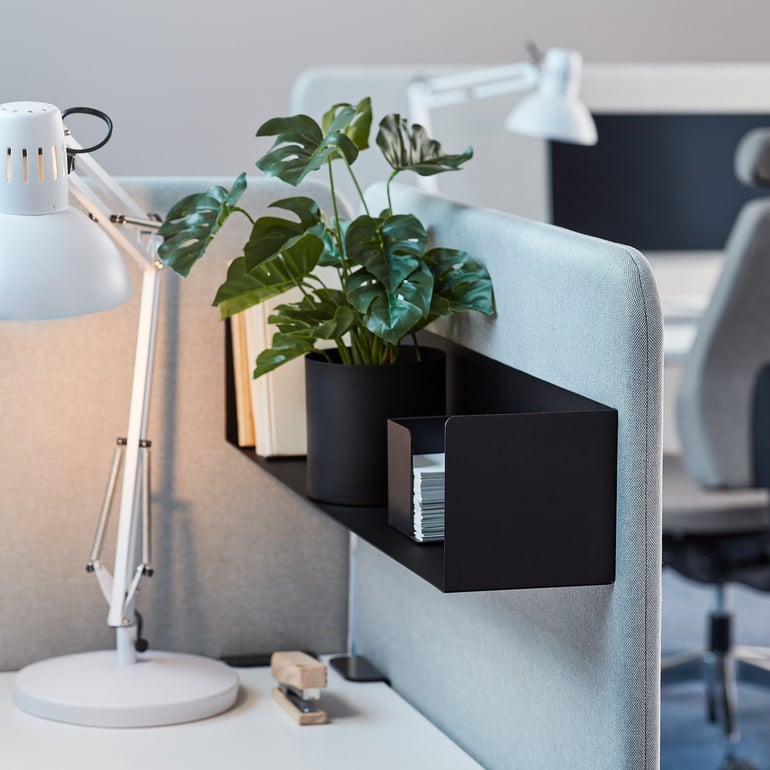
A small desktop shelf or stand for personal touches like a plant, a photo, a pen pot, etc. keeps those items contained and intentional.
Make the most of the space under your desk
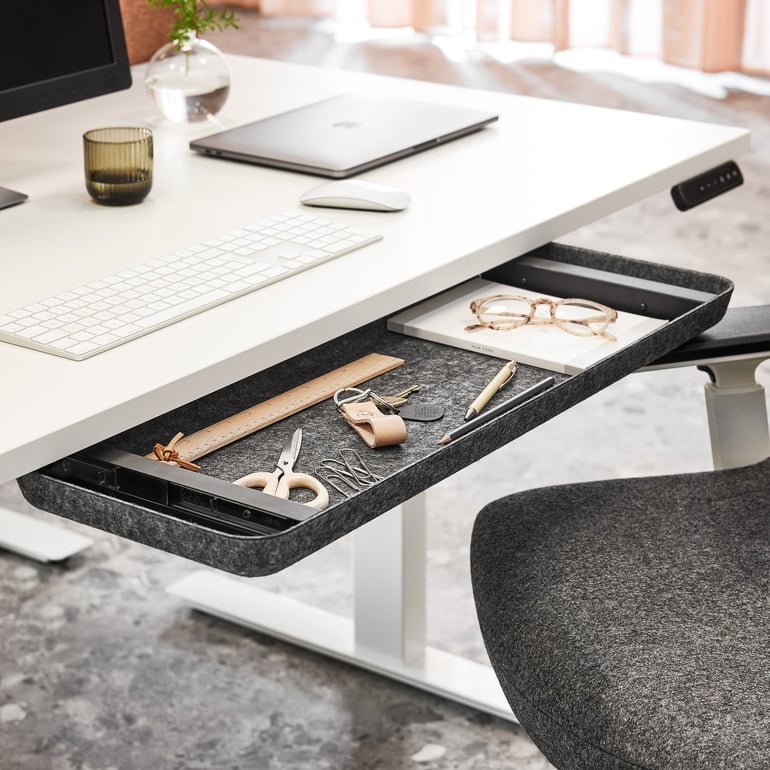
Under the desk is one of the most underused storage areas in any workspace. A mobile drawer unit with organisational inserts keeps stationery, documents and everyday items off the desk entirely. Many units are compact enough to slide out of the way when not needed, and they move easily if your team reconfigures the layout.
For paper recycling (which has a habit of piling up on and around desks) a lidded archive box stored under the desk keeps things neat and contained until it needs emptying.
If your team regularly works with catalogues, binders or reference materials, a small nearby cabinet keeps those within arm's reach without them ever needing to live on the desk surface.
Sort your cables once and for all
Add labels,seriously, they work
Labels are one of the least glamorous organisation tools and one of the most effective. Labelled trays, shelves, drawers and cables mean anyone can find what they need quickly - and more importantly, put things back in the right place without having to think about it. In shared workspaces, that consistency matters.
A handheld label printer makes this fast and keeps things looking professional rather than makeshift.
The daily reset, your most powerful habit
All the storage solutions and accessories in the world won't maintain a tidy desk on their own. Habits do that.
Encourage your team to take five minutes at the end of each working day to reset their space: clear the surface, file or bin loose papers, take cups to the kitchen, put things back where they belong. It takes almost no time when done daily and it means no one arrives to a cluttered desk the next morning.
In hot-desking environments, a daily reset isn't just a nice habit, it's a basic courtesy and a reasonable workplace expectation. Making it a clear, communicated standard removes any ambiguity about what's expected.
A quick word on desk hygiene
Looking for more desk storage solutions?
FAQ
- A tidy desk reduces the time spent searching for things, supports focus and creates a more professional environment. It also makes surfaces easier to clean regularly, which matters for office hygiene, particularly in shared or hot-desking setups.
- The most effective approach is a five-minute end-of-day reset. Clear the surface, file or bin loose papers and return items to their proper place before you leave. Combined with good storage ( a drawer unit, sorting tray and cable management ) it becomes a habit that takes almost no effort to maintain.
- Monitor arms, mobile drawer units, desktop sorting trays, cable management trays and desk screen hooks are among the most effective. They give everything a fixed home, keep surfaces clear and make tidying up fast and instinctive.
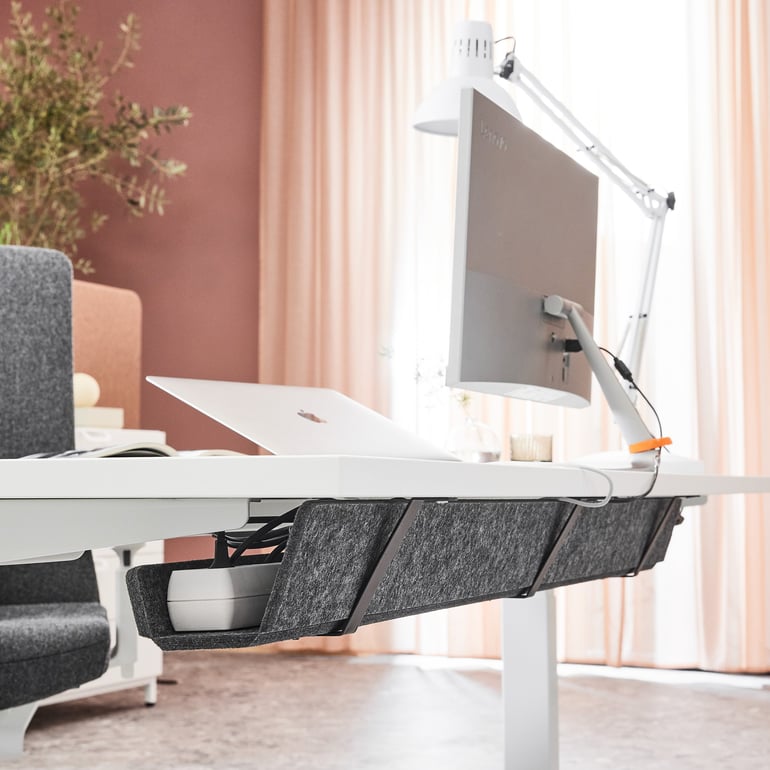
- Cable trays, spiral wraps and cable boxes keep wires contained and off the floor. Desks with built-in cable ports are the cleanest solution for new fit-outs. Labelling cables is a small step that saves significant time in shared workspaces.
- A clean desk policy sets clear expectations for how desks should be left at the end of each working day: surfaces cleared, sensitive documents secured and personal items stored away. It's particularly valuable in open-plan and hot-desking environments, and it supports GDPR compliance by ensuring personal data isn't left visible or accessible overnight.
- Clutter creates low-level cognitive distraction that makes it harder to focus and easier to feel overwhelmed. A consistently tidy workspace reduces that friction, supports clearer thinking and signals to your team, and to visitors, that your organisation takes its environment seriously.
- Make it easy with the right storage solutions, set clear expectations through a simple desk policy and lead by example. When tidiness is a shared standard rather than an individual preference, it tends to stick.