- AJ Products UK
- Blog: Tips to Inspire Happiness at work
- Buying guides
- What is COSHH and how do I ensure my business complies with UK law?
What is COSHH? The 8 steps to COSHH compliance explained
What does COSHH stand for?
What substances does COSHH cover?
- Chemicals and chemical mixtures classified as hazardous under the CLP Regulation (EC) No 1272/2008
- Substances with a Workplace Exposure Limit (WEL) set by the HSE in EH40
- Biological agents including bacteria, viruses, and fungi that may cause disease
- Dusts present in the air above concentration thresholds (10 mg/m³ inhalable; 4 mg/m³ respirable)
- Fumes, vapours, mists, and gases produced during work processes
- Any other substance that creates a risk to health due to its chemical or toxicological properties
How many steps are there to COSHH compliance?
- Assess the risks to health from hazardous substances
- Determine what precautions are needed
- Prevent or adequately control exposure
- Ensure that control measures are used and maintained
- Monitor the exposure of employees to hazardous substances
- Carry out appropriate health surveillance
- Prepare plans and procedures to deal with accidents, incidents and emergencies
- Ensure employees are properly informed, trained and supervised
The 8 steps of COSHH compliance
1. Assess the risks to health
Before using any hazardous substance at work, employers must carry out a COSHH assessment. This means identifying what hazardous substances are present, who could be exposed and how, evaluating the risks from that exposure, and deciding what controls are needed.
Assessments must be suitable and sufficient, which in practice means thorough enough to identify the actual risks rather than generic or theoretical ones. If you employ five or more people, the assessment must be recorded. Assessments must be reviewed when the assessment is no longer valid, when substances or work processes change, or following any incident or near miss.
Product safety data sheets (SDS) are the starting point for identifying hazard information and are a legal requirement for any substance classified as hazardous for supply.
2: Determine what precautions are needed
Once the risks are identified, the next step is to decide what controls are necessary. This involves considering the full range of controls available, from eliminating the hazardous substance entirely, to substituting it for a safer alternative, through to engineering controls, administrative measures, and personal protective equipment (PPE).
The hierarchy of control applies: elimination and substitution should be considered first. Only where these are not reasonably practicable should engineering or administrative controls, and finally PPE, be relied upon.
3. Prevent or adequately control exposure
Employers must prevent exposure to hazardous substances wherever possible. Where prevention is not reasonably practicable, exposure must be adequately controlled. Adequate control means keeping exposure below the relevant Workplace Exposure Limit (WEL) where one exists, and as low as reasonably practicable in all cases.
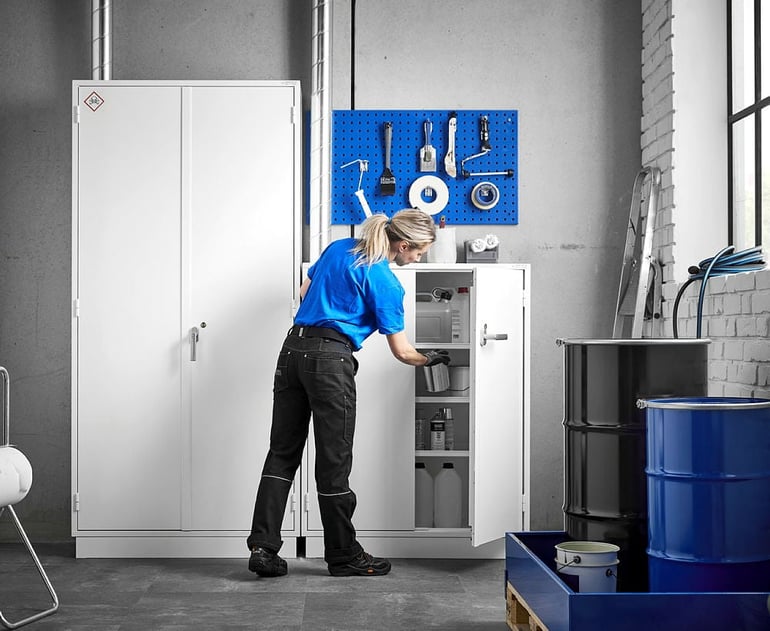
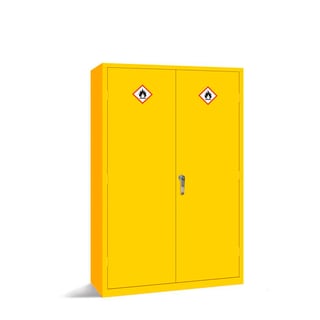
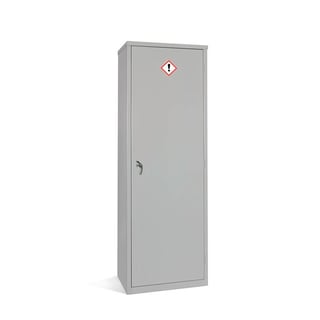
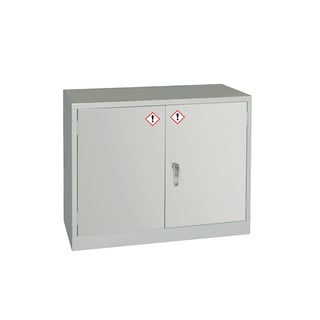
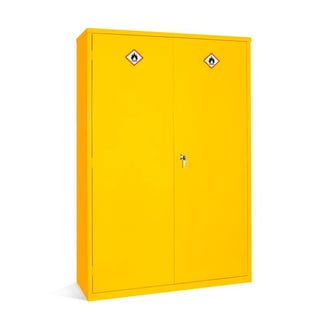
Control measures include local exhaust ventilation, enclosed systems, safe storage, and suitable PPE. Correct storage is a significant element of this step. Hazardous substances must be stored in appropriate, lockable cabinets that prevent access by unauthorised personnel and contain potential spills.
Browse our COSHH cabinets and hazardous substance storage for compliant storage options. Note that not all substances can go in a standard COSHH cabinet: acids require acid cabinets constructed from HDPE or polypropylene, and gases require dedicated gas cylinder storage.
For additional containment at floor level beneath drums and IBCs, our spill containment pallets and bunds provide secondary containment in line with COSHH storage requirements.
4. Ensure control measures are used and maintained
Control measures are only effective if they are properly used and kept in working order. Employers must take all reasonable steps to ensure employees use the controls provided, including ventilation equipment, PPE, and safe storage. Local exhaust ventilation systems must be examined and tested at least every 14 months. Other controls should be checked at suitable intervals.
Employees have a corresponding duty to use the controls provided, report defective equipment, and not misuse or interfere with anything provided for their protection.
5. Monitor employee exposure
Where the risk assessment indicates that monitoring is necessary, employers must carry out regular workplace monitoring of employee exposure. This applies particularly where failure of a control measure could result in serious harm, or where there is uncertainty about whether exposure is adequately controlled.
Monitoring records must be kept for at least five years. Where health surveillance records are linked to individual employees, records must be retained for 40 years.
6. Carry out appropriate health surveillance
Health surveillance is required where employees are exposed to substances known to cause certain diseases or conditions, where there is a reasonable likelihood of the disease occurring given the work, and where valid means exist to detect the disease or condition. Common examples include skin assessments for employees working with wet work or dermal sensitisers, and lung function testing for those exposed to respiratory sensitisers.
The purpose of health surveillance is to detect health effects early and to evaluate whether control measures are working.
7. Prepare plans and procedures for accidents and emergencies
Where there is a risk of an accident, incident, or emergency arising from work with hazardous substances, employers must prepare plans and procedures to deal with them. This includes identifying the scenarios, putting appropriate safety equipment in place (eyewash stations, spill kits, fire extinguishers), and ensuring employees know what to do and can respond quickly.
Drills and exercises should be carried out where exposure to hazardous substances could result in serious harm.
8. Ensure employees are informed, trained and supervised
Every employee who works with or may be exposed to hazardous substances must be provided with suitable and sufficient information, instruction, and training. This covers the risks from the substances they work with, the results of any workplace monitoring and health surveillance, the control measures in place and how to use them correctly, and the emergency procedures for accidents and incidents.
Information must be provided in a way that is understandable and appropriate to the level of risk. Supervision must be proportionate to the hazard and the experience of the employee.
COSHH compliant storage
Correct storage is a legal requirement under Step 3 of the COSHH Regulations. Substances hazardous to health must be kept in appropriate, lockable storage that prevents unauthorised access and contains potential spills.
Key requirements for COSHH compliant storage include a liquid-tight sump base, ventilation to prevent vapour build-up, GHS-compliant hazard labels, and a lockable door. Storage must also comply with the HSE Guide HSG51 for flammable liquids and the Dangerous Substances and Explosive Atmospheres Regulations 2002 (DSEAR) where applicable.
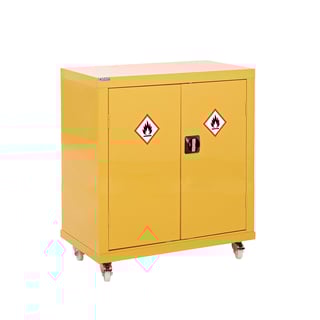
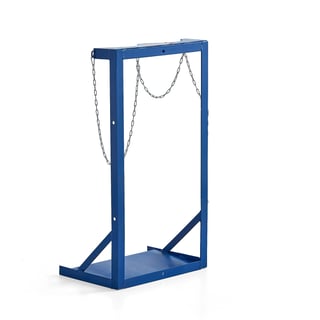
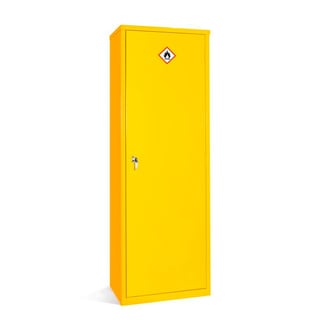
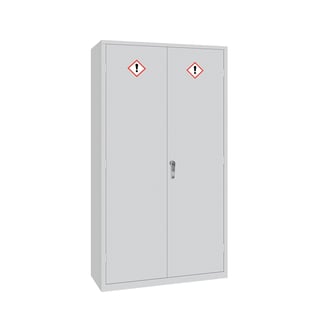
Our range of COSHH cabinets and hazardous substance storage covers every storage type required under the regulations:
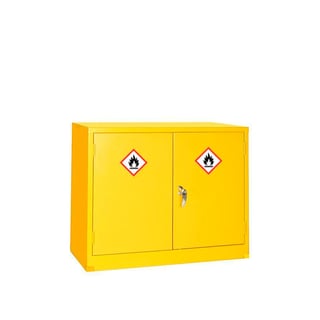
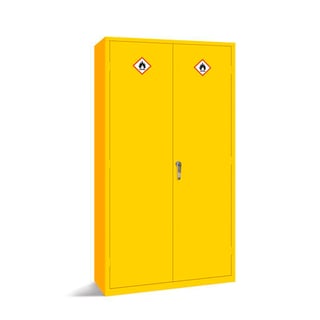
- Yellow COSHH cabinets and cupboards - for harmful and irritant substances such as cleaning chemicals, paints, solvents, and adhesives
- Acid cabinets (HDPE or polypropylene construction) - for acids, alkalis, and corrosive substances, steel cabinets are not suitable for acid storage
- Gas cylinder cabinets - for outdoor storage of compressed gas cylinders, with ventilation and chaining points to prevent tipping
- Chemical storage shelving - with integrated sump trays for lower-risk substances where open access is needed
For further guidance on safe storage and disposal of chemical waste, read our guide on how to store chemicals and dispose of hazardous waste safely.
Key COSHH terms explained
CLP Regulation (Classification, Labelling and Packaging of Substances and Mixtures, EU Regulation EC No 1272/2008, retained in UK law post-Brexit) governs how hazardous substances are classified and labelled. GHS hazard pictograms on COSHH cabinets are required under CLP.
GHS (Globally Harmonised System of Classification and Labelling of Chemicals) is the international framework on which CLP is based. The familiar diamond-shaped hazard pictograms on chemical packaging and COSHH cabinets are GHS symbols.
REACH (Registration, Evaluation, Authorisation and Restriction of Chemicals) is UK and EU legislation governing the registration and risk management of chemical substances. UK REACH is administered by the HSE.
WEL (Workplace Exposure Limit) is the maximum concentration of a substance in workplace air that employees may be exposed to, averaged over a reference period. WELs are published by the HSE in EH40.
SDS (Safety Data Sheet) is a document that provides information on a hazardous chemical's properties, health risks, and handling requirements. Safety data sheets must be obtained from suppliers for all hazardous substances and must be available to employees.
- A COSHH risk assessment identifies what hazardous substances are present in a workplace, who could be exposed and how, the level of risk that exposure creates, and what control measures are required. It must be carried out before work with a hazardous substance begins. Employers with five or more employees must record the assessment.
- COSHH assessments must be reviewed when they are no longer valid. This includes when substances or work processes change, following any incident or near miss, when health surveillance results suggest exposure is not being adequately controlled, or at regular intervals as part of a planned review programme. The HSE recommends reviewing assessments at least annually.
- COSHH requires that hazardous substances are stored in suitable, lockable cabinets with ventilation, a sump base to contain spills, and GHS-compliant hazard labelling. The specific cabinet type depends on the substance: standard COSHH cabinets for harmful and irritant substances, HDPE acid cabinets for corrosives, fire-resistant cabinets for large volumes of flammables, and dedicated gas cylinder cabinets for compressed gases.