- AJ Products UK
- Inspiration
- Tips & trends
- How to store mobile phones in school under the new phone-free law
How to store mobile phones in school under the new phone-free law
What the new phone ban law says
There's no outright criminal ban on phones in schools. That's the bit a few headlines got slightly wrong. What changed in April was the legal weight behind the Department for Education's January guidance.
On 20 April 2026, the government announced plans to introduce a legal requirement for schools in England to restrict the use of mobile phones during the school day, by putting existing DfE guidance on a statutory footing. Once guidance is statutory, it stops being something you can quietly skim. Schools and academy trusts must be able to demonstrate that they have followed it or have lawful reasons for any departure.
The guidance used to include a "not seen, not heard" option, which let pupils keep phones switched off in bags during the day. That's been removed.
The trouble with keeping phones in bags
Phone-in-bag policies don't really work in practice, and most heads we speak to admit as much. Phones end up in pockets. Confiscating them eats into lessons, so many teachers have stopped enforcing it.
The new statutory expectation is that pupils shouldn't have access to their phones during the school day. A bag won't achieve that. Nor will an unlocked drawer, particularly if it isn’t locked. What schools need is a designated, lockable place where phones go in the morning and come out at the end of the day. Somewhere visible enough that you can point to it during an inspection.
What good phone storage for schools looks like
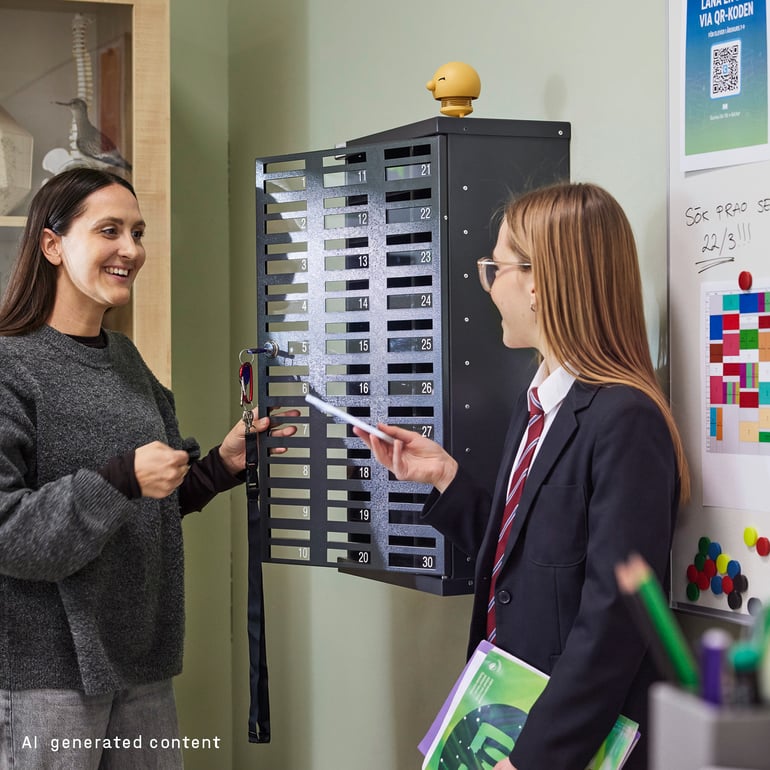
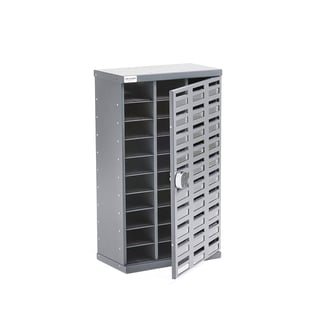
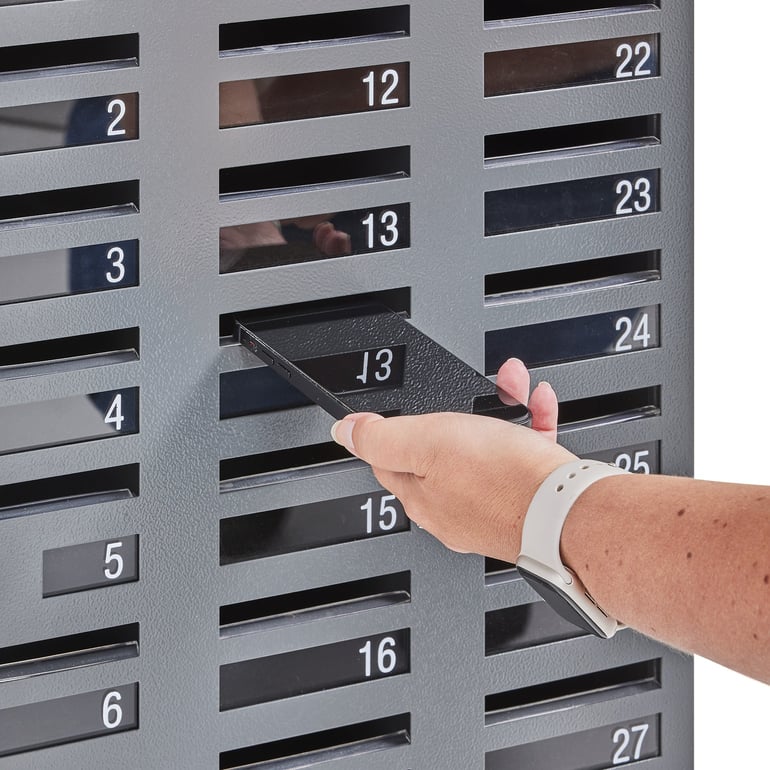
- Numbered, individual compartments: one phone per slot, ideally with a number that maps to your form list.
- Individual drop slots: the best cabinets have a small opening per compartment so pupils can post their phone in without the door being opened at all. The whole drop-off can happen during morning registration with the cabinet locked the entire time.
- Transparent fronts: see-through panel on each compartment lets a tutor see at a glance which compartments are full and which aren't. You'll know before lunchtime if someone "forgot" to hand theirs in.
- Shock-absorbent mat: phones aren't cheap and they don't love being dropped onto sheet steel.
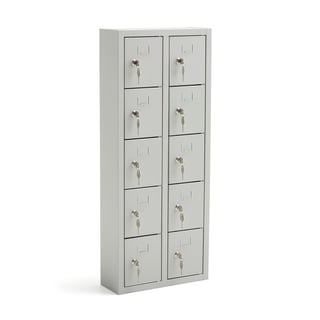
- Lock type that suits the school: locks are familiar and reliable. Electronic code locks remove the lost-key problem and let you change the code each term without buying new locks.
- A long warranty: storage cabinet ought to last a decade. Ours come with a seven-year guarantee, which tells you what we expect of them.
Choosing the right phone storage cabinet setup for your school
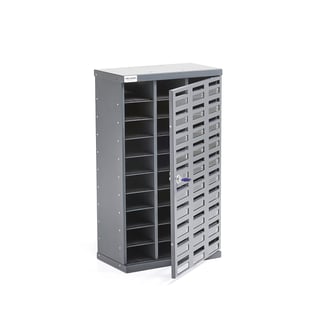
For form-room daily use across Years 7–11: the PAUSE mobile phone storage cabinet is the workhorse. Thirty numbered compartments, transparent fronts, individual drop slots, shock-absorbent mats, sheet steel, wall-mounted, dark grey. It's the cabinet to point at when an inspector asks where the phones are. There's also a PAUSE variant with an electronic code lock, which is the version most heads pick once they've spent a half-term hunting for the spare key.
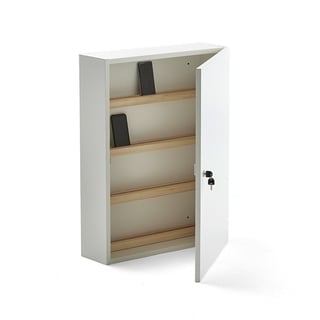
For front-of-house, sixth-form areas, or schools where appearance matters: the SNOOZE mobile phone cabinet holds 28 phones across four shelves. It looks at home in a reception or a modern teaching block where a steel locker would feel out of place.
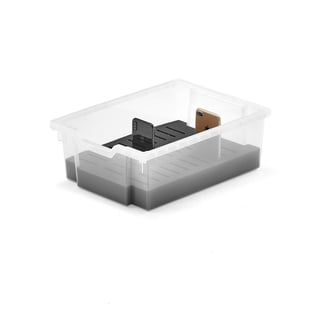
For classroom-level grab-and-go, supply teachers, exam invigilation or smaller departments: a portable mobile phone storage box holds 30 phones upright in a foam-rubber insert and weighs less than a kilogram. It's the right answer for drama studios, off-site trips and anywhere a permanent cabinet doesn't make sense.
Most secondaries we work with end up running a mix. PAUSE cabinets in form rooms for daily use, a SNOOZE near reception for late arrivals and visitors, and a couple of storage boxes for floating cover.
Things worth thinking about before September
You'll also get phone calls from parents, particularly in the first fortnight. Most of them just want to know how to reach their child in an emergency, so it helps to notify them before term starts.
The Bill's wording allows for exemptions covering sixth formers, boarders and pupils using phones as medical devices, but those exemptions don't write themselves and Year 11 will notice if older pupils keep theirs. It is worth deciding where you stand on this before pupils ask.
The other thing schools sometimes underestimate is where to actually put the storage. A cabinet in each form room makes handover quick but means more units to manage. A central drop-off near reception is tidier but creates a queue at 8.30. Neither is wrong, but it's worth trying one for a half-term before committing to it across the school.

What about the funding?
Where Scotland, Wales and Northern Ireland sit
What to do this term
If your school doesn't yet have a settled phone storage system, here's a sensible running order for the rest of the summer term.
- Start by checking your current policy against the January 2026 DfE guidance, then walk your buildings and identify where storage should be placed. Form rooms tend to be the easiest, but some schools prefer a central drop-off near reception.
- Run a parent comms note before the September return so families aren't caught out on day one.
- Train form tutors on the daily routine, including the medical and SEN exemption process.
Find the right cabinet for your school
We've helped schools set up phone storage across England, from single-form-entry primaries through to large secondaries running cabinets on every corridor. Our school phone cabinets come with a seven-year guarantee. If you'd like to talk through what would work for your buildings, get in touch with our team for a quote that fits your school.
- In effect, yes. The government's January 2026 guidance, now placed on a statutory footing through the Children's Wellbeing and Schools Act 2026, requires schools to operate as phone-free environments throughout the school day.
- The legal requirement applies to schools in England. The Bill was amended during its passage to allow potential exemptions for sixth form students, boarding schools and pupils using phones as medical devices.
- Not yet. There's no dedicated funding line in the Act for cabinets. School leaders' unions have asked for capital funding; until then, costs sit with school budgets.
- Yes. The DfE has said that Ofsted will consider a school's mobile phone policy "immediately" as part of inspections.
- It will happen. An electronic code lock removes the issue entirely and lets you change the code each term without replacing any hardware.