- AJ Products UK
- Inspiration
- Improving the work environment
- How to protect your mental health when working from home
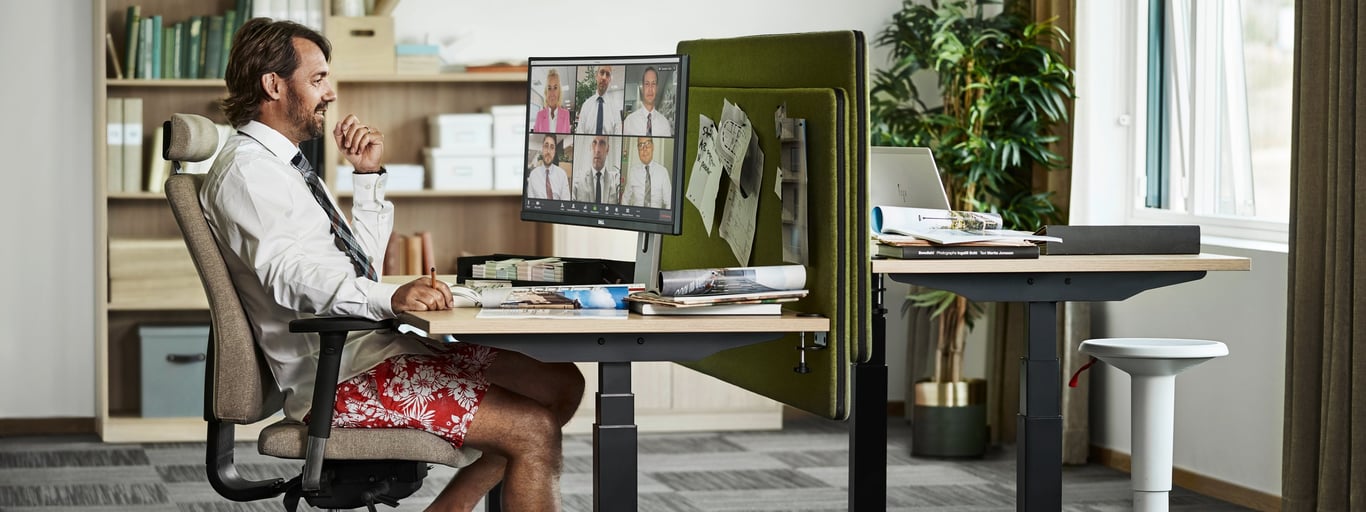
How to support your mental health when working from home
The good news? Small changes to how you work, and how your home workspace is set up, can make a real difference. Here are some simple, practical ways to protect your mental wellbeing when working remotely.
Stay connected, not isolated
Stay in touch with your colleagues throughout the day. Make sure you talk to people on the phone or video calls as well as using email and messaging apps. If you don’t usually do this, make it a goal to have at least one "proper" conversation each day. Set up regular "all-hands" team meetings where you can all catch up on work and personal news. Even if you’re not always talking about work, chatting to your colleagues strengthens your working relationship, boosts morale and prevents you from feeling isolated, so don’t feel guilty about it.
Build movement into your workday
Sitting still for long periods can affect both physical comfort and mental wellbeing. Movement helps reduce stress, improve focus and lift your mood. Get outside for a walk or a run if you can but there are plenty of things you can do indoors to stay active too. It could even be as simple as just running up and down the stairs a few times. Get on your exercise bike if you have one or try active office furniture, such as a balance ball chair or sit-stand desk, to keep you on the go even while you work. Simple habits like standing during calls or changing posture regularly help keep energy levels up and prevent mental fatigue. Remember to look after your body: eat healthily, stay hydrated and make sure you get enough sleep.
Make the most of natural light
Try to set up your desk near a window where you can see out and where you will get some natural light. Access to natural light improves sleep cycles and wards off seasonal depression by increasing the brain’s production of the mood-enhancing chemical serotonin. This will help you to stay focused, awake and productive during your workday. The view is also important. Being able to see outside, particularly if you can see green spaces, can also boost your mood and help you to stay relaxed. Make sure the light is right for you. Because home lighting is rarely as bright as office lighting, you may need a desk lamp to ensure your workspace is adequately lit so you don’t strain your eyes.
Set healthy boundaries between work and home
One of the biggest challenges of working from home is knowing when to switch off. Without a commute or a clear divide between work and home, it’s easy for the working day to stretch into the evening. Setting healthy boundaries can really help. This might mean starting and finishing work at roughly the same time each day, taking proper breaks away from your screen, or creating a dedicated workspace — even if it’s just one corner of a room. Simple routines like these help your brain recognise when it’s time to focus and when it’s time to relax, making it easier to protect your mental wellbeing over the long term.
Talk about how you're feeling
If you’re feeling anxious, overwhelmed or low, you don’t have to manage it alone. Talking helps, whether that’s with a colleague, manager, friend or family member. It may be a cliché to say a problem shared is a problem halved but allowing people to help you by making practical suggestions, sharing their coping techniques or just offering a friendly ear will help relive the burden. If work is contributing to how you’re feeling, speak to your manager. Most issues are easier to address early, before they build up.
Practice mindfulness techniques
Mindfulness means focusing on the present moment, where you are and what you’re doing instead of being consumed by what’s going on around you. Some simple techniques can help you to relax when you’re feeling anxious or stressed.
- Breathing: Start by breathing in through your nose and out through your mouth slowly. One breath cycle should last for approximately 6 seconds. Focus on your breathing and let go of your thoughts.
- Observation: Choose a natural object from within your immediate environment and focus on watching it for a minute or two. Don’t do anything except allow yourself to watch it as if you were seeing it for the first time and think about its place in the world.
- Appreciation: Find 5 small things in your day that usually go unappreciated. It could be anything from putting your feet into your favourite slippers to listening to the birds in the morning. Think about each one and how it improves your life in small but meaningful ways.
Mental wellbeing is part of good workplace design
Whether you’re working from home or in an office, mental wellbeing is closely linked to your working environment. Comfort, movement, light and flexibility all play a role in how we feel and perform at work.