- AJ Products UK
- Blog: Tips to Inspire Happiness at work
- Improving the work environment
- Transform Your Small Office: Space-Saving Tips & Tricks
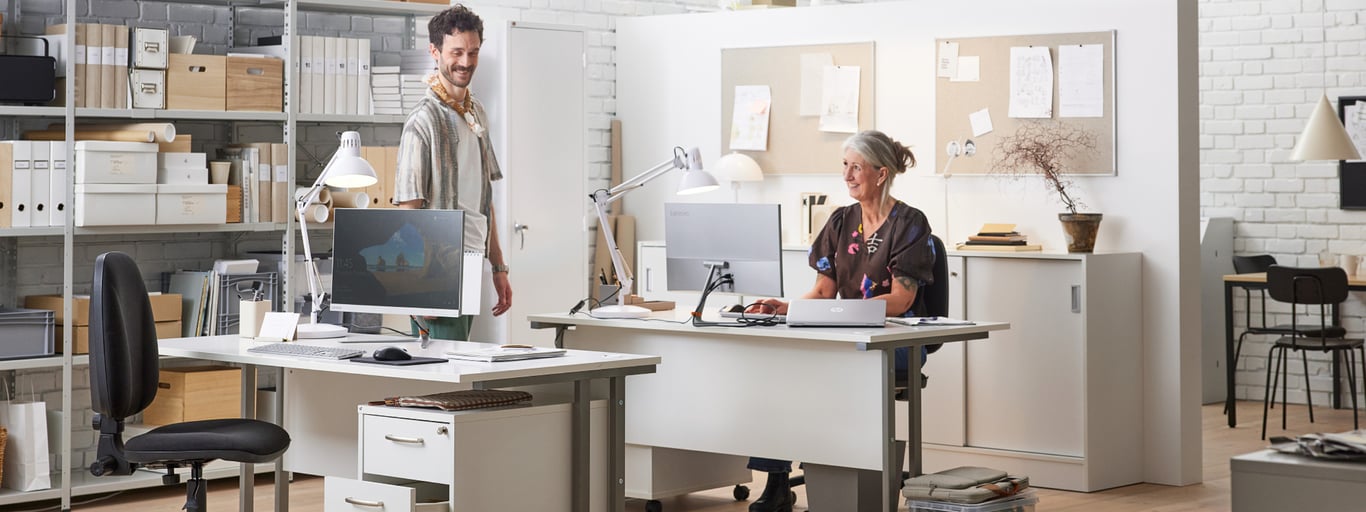
How to make the most of a small office space
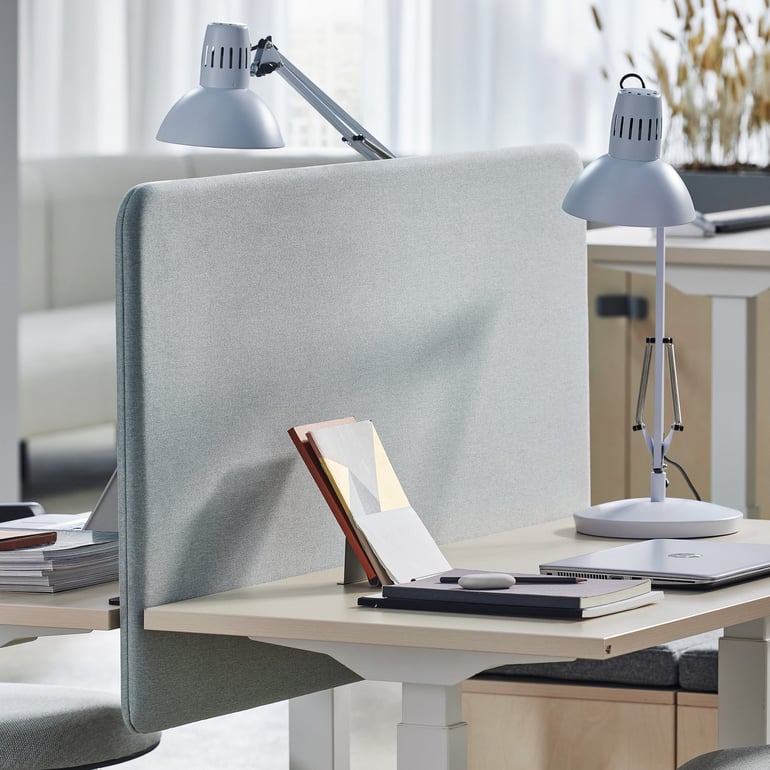
Choosing the right desks for a small office
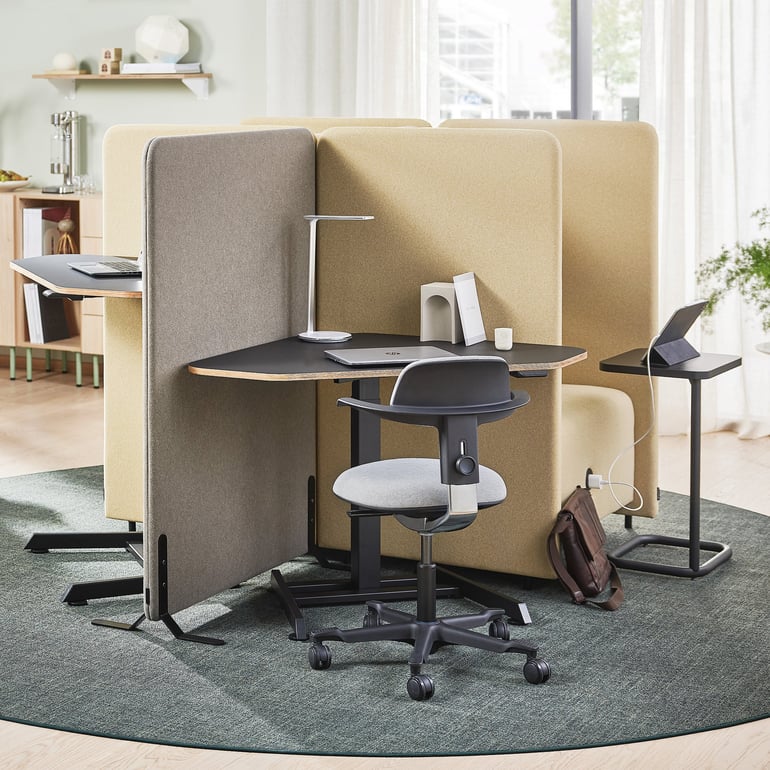
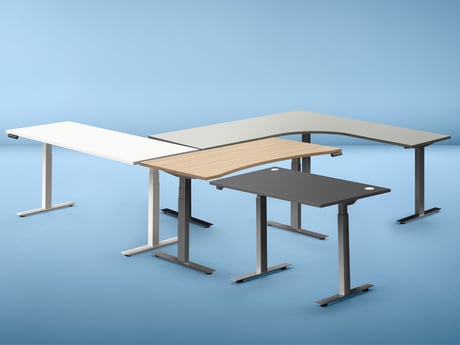
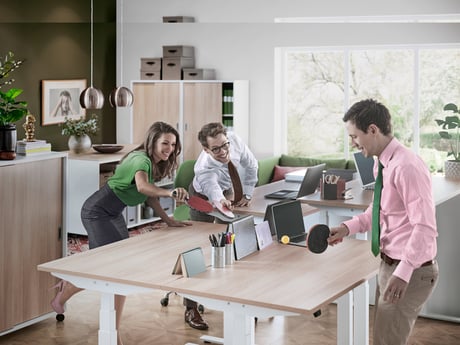
Small triangular corner desks can make the most of unused spaces while conserving room. Incorporating a height-adjustable small desk promotes ergonomics, ensuring a comfortable workspace. Grouping four corner desks together with screens in between creates an ideal collaborative work environment, particularly suited for smaller office settings
How to optimise your desk storage
How to handle meetings in a small office
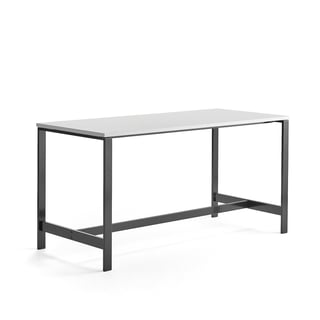
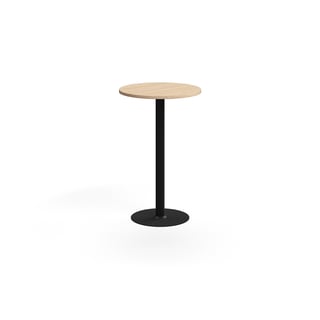
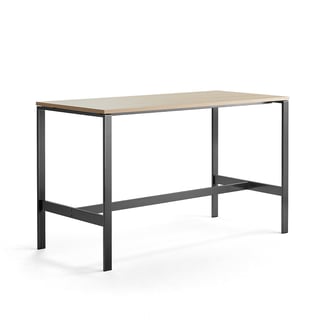
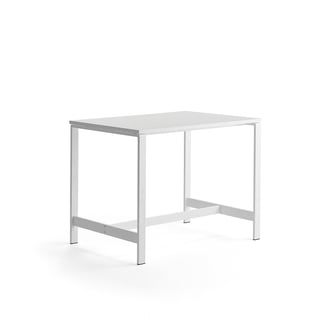
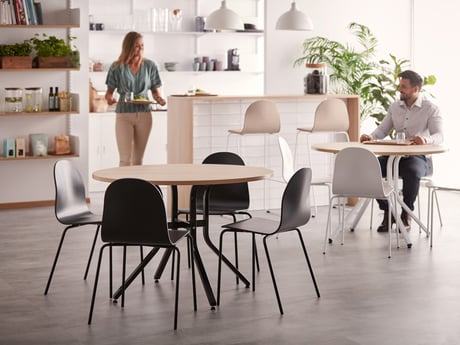
Opting for a standing table over a traditional conference table conserves valuable space, making it ideal for shorter meetings. Embrace a dynamic meeting environment by standing or complement the setup with high stools that can be neatly tucked under the table when not in use.
Space-saving storage ideas for compact offices
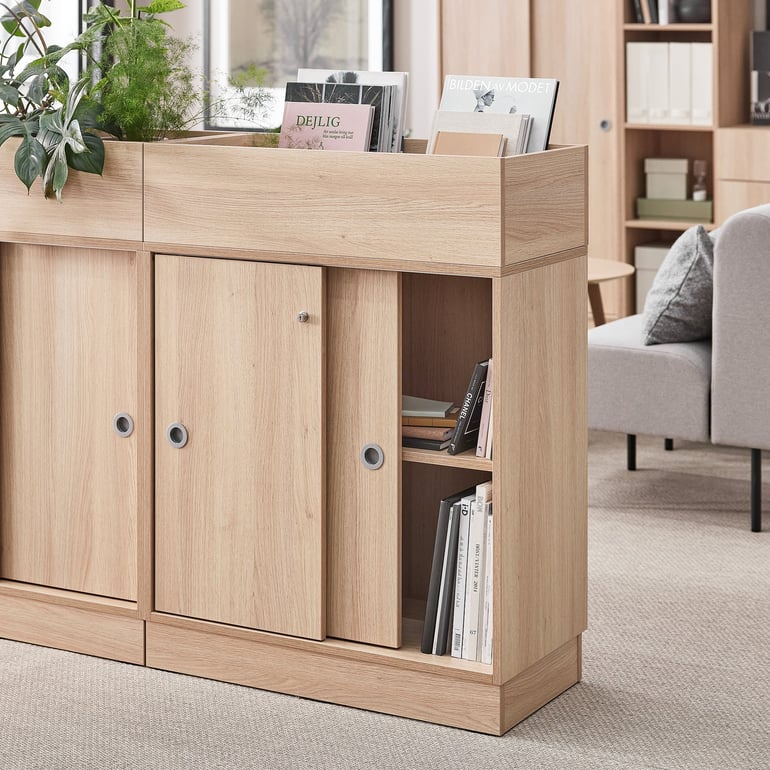
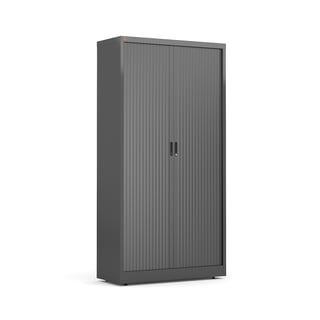
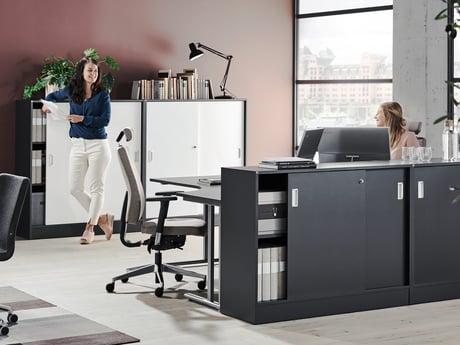
Cabinets with sliding or roller doors are one of the most practical choices for tight spaces. Because the doors don't swing outward, they free up the floor and wall space in front of them, solving the common problem of storage that can't be fully opened because there simply isn't room. They also keep supplies out of sight, which goes a long way toward maintaining a tidy, professional appearance.
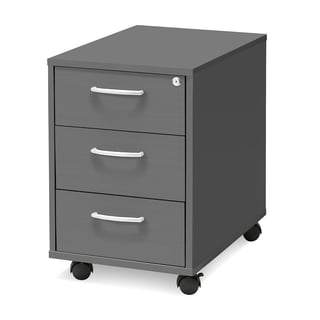
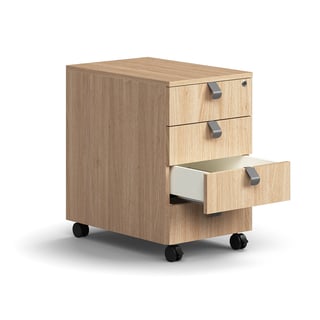
For items you use frequently, a mobile pedestal on wheels keeps essentials close at hand without blocking walkways. It can be moved out of the way when not needed and repositioned easily as your layout changes.
Use a CPU holder for your computer so it does not take up desk space or get in the way on the floor.
Want to know more about storage cabinets?
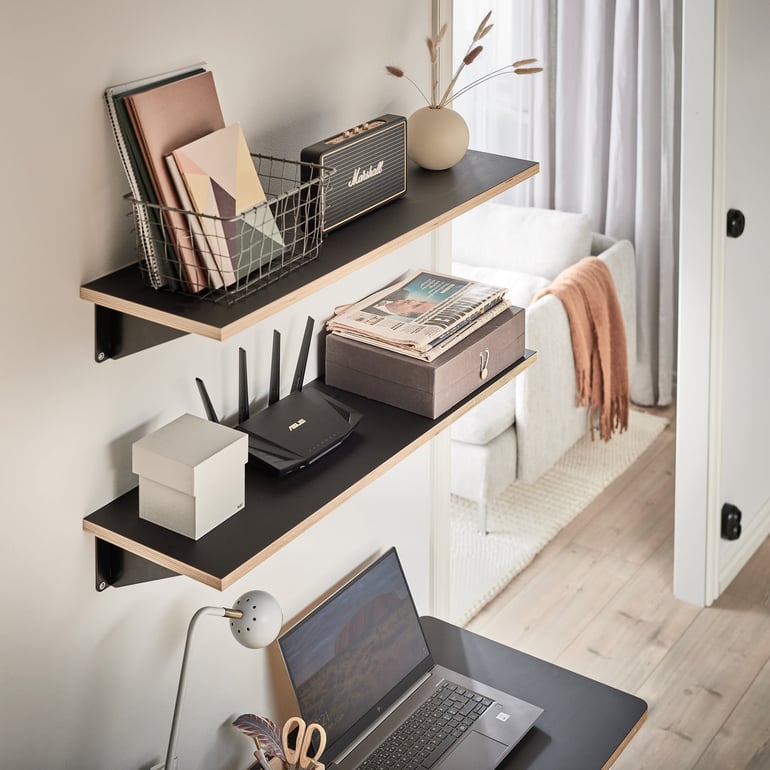
Maximise wall storage
If floor space is genuinely limited, the answer is often to build upwards.
Wall-mounted shelf systems with adjustable tracks offer maximum flexibility, you can configure them with just a few shelves or cover an entire wall, and adjust the layout as your needs change. Wall-mounted cabinets follow the same logic: storage that lives on the wall rather than the floor keeps the working area clear and the space feeling open.
Think about which surfaces are currently going unused. Above a desk, above a doorway, along a corridor wall... these are often untapped storage opportunities that don't cost floor space.
Wall-mounted brochure racks can be used for incoming mail or forms, taking up much less space than traditional mail sorting cabinets and form shelves.
For outerwear and bags, wall-mounted hallway storage is the best option. A coat hanger mounted under a hat rack with hooks provides plenty of storage in a small area.
Foldable furniture for flexible spaces
Some offices need to serve different purposes at different times: a workspace in the morning, a meeting room in the afternoon, a training space on occasion. Foldable furniture makes that kind of flexibility possible without requiring a larger room.
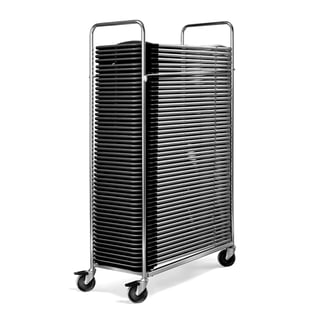
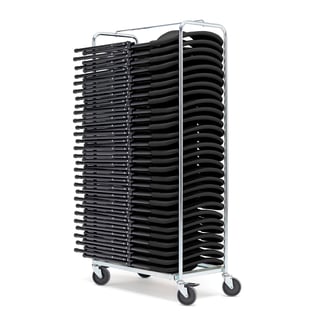
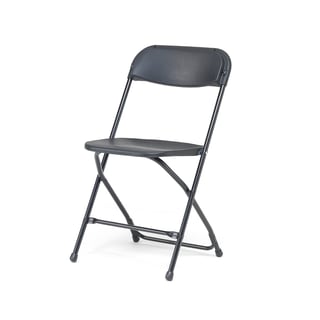
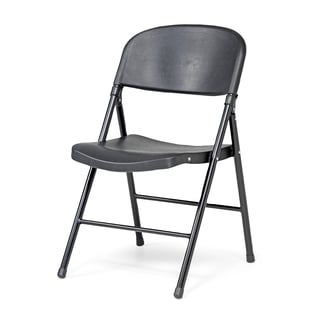
With a few folding chairs and a collapsible table, you can quickly create extra seating when needed, and the furniture takes up minimal space when folded. Lack a separate storage area for folding chairs? Hang them on a hook on the wall!
A multifunctional flipchart stand that can be folded into a table always provides extra space when needed. The stand functions not only as a flip chart holder and extra table but can also be used as a whiteboard or magnetic bulletin board.
Making a small office feel larger
Light and colour matter more than people often give them credit for. Light, neutral tones reflect more natural light and make rooms feel more open. A consistent furniture palette, keeping to a uniform style rather than mixing many different pieces, reduces visual clutter and gives the space a more considered, professional feel.
Natural light should be maximised wherever possible. Position workstations near windows and avoid blocking light sources with tall furniture. Where natural light is limited, good-quality task lighting keeps the space feeling bright and functional rather than closed-in.
Clear sightlines and unobstructed walkways are the single biggest contributors to a space feeling workable. When people can move through the office without navigating around furniture, even a small room feels manageable.
Hot-desking and shared spaces in small offices
Top space saving tips for small offices
- Use height-adjustable corner desks to reclaim unused corners
- Choose furniture on wheels that can be moved when not needed and repositioned as the team grows
- Mount shelves, coat racks and brochure holders on walls to keep the floor clear
- Opt for sliding-door cabinets where swing-door units would obstruct movement
- Keep a uniform furniture style to reduce visual clutter
- Use light, neutral colours to make the space feel more open
- Introduce a clean desk policy, especially in hot-desking environments
- Look for multifunctional pieces that serve more than one purpose
If you need help furnishing a small workplace, we're here to help. Simply get in touch and we’ll happily assist with layout and product recommendations.
Smart furniture for small offices

FAQ
- Start with the floor and keep it as clear as possible by moving storage upwards onto walls and choosing furniture with a compact footprint. Corner desks, mobile pedestals and sliding-door cabinets are among the most effective tools for reclaiming usable space. Then look at what's multifunctional: every piece of furniture that serves two purposes is one less piece you need.
- Corner desks and height-adjustable compact desks are the most practical choices for small commercial offices. Corner desks use space that would otherwise sit empty, while height-adjustable models add ergonomic value without a larger footprint. For teams, corner desks can be grouped into workstations with screens between them.
- A standing table with high stools is the most space-efficient option. The stools push neatly underneath when not in use. An L-shaped desk with a curved end also works well, providing a meeting point without requiring a separate table. For occasional larger meetings, folding tables and chairs that store away cleanly are a practical solution.
- Sliding or roller-door cabinets are ideal because they don't need clearance space in front of them. Wall-mounted shelving systems are equally valuable since they make use of vertical space that's often completely unused. Mobile pedestals keep frequently used items accessible without blocking walkways and can be moved easily as the layout evolves.
- Light, neutral colours and a consistent furniture palette reduce visual clutter and make the space feel more considered. Maximise natural light where possible, keep walkways clear and use wall-mounted storage to free up floor space. Good-quality lighting makes a significant difference too, a well-lit space always feels more open than a dim one.
Get the latest product launches and offers sent direct to your inbox
Do you want to receive exclusive offers, information about new products and inspiration on how you can improve your workplace? Sign up for our free newsletter and be the first to receive our best offers.*By clicking subscribe, I confirm that I have read the privacy policy.